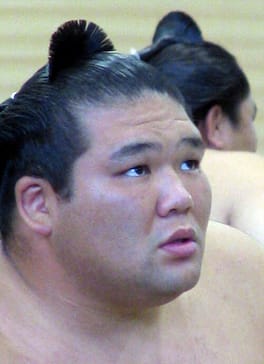
Photo: Unknown author / CC BY-SA 2.0 (source: Wikimedia Commons)
My Take
I've got a soft spot for the technician types in sumo, and Tochiazuma is exactly my kind of guy. A Tokyo kid from Sumida who climbed all the way to ozeki, second-generation in a sumo family, which I always find quietly impressive because following a wrestling father is a heavy thing to carry. What I love is that he wasn't a slab of muscle just bulldozing people; from what I gather he won with footwork and clever grips, building each bout like a craftsman rather than swinging haymakers. There's something I respect about a smart wrestler thriving in a sport that rewards sheer mass. He had injury troubles too, which makes the ozeki run feel earned rather than gifted. The serious, buttoned-up ones are always the ones I end up rooting for, and he's that to a tee.
This take was written by generative AI, one per person, from publicly reported facts (editorial policy). It is a reading of the record, not reporting.
Overview
Tochiazuma Daisuke is a retired professional sumo wrestler born on November 9, 1976, in Sumida, Tokyo. He came from a sumo family and rose to the rank of Ozeki, one of the highest ranks in professional sumo. Known for a technical, skill-based style of wrestling rather than relying solely on physical power, he earned a reputation as a craftsman of the ring. After retiring from active competition, he took on a role as a stable master, mentoring the next generation of wrestlers.
1. Profile
- Name (English)
- Tochiazuma Daisuke
- Name (Japanese)
- 栃東大裕
- Reading
- とちあずま だいすけ
- Real name
- 志賀太祐
- Born
- November 9, 1976 (age 49)
- Origin
- Sumida, Tokyo, Japan
- Occupation
- Sumo Wrestler
- Zodiac / Chinese zodiac
- Scorpio / Dragon
2. Links
- Wikipedia (Japanese)https://ja.wikipedia.org/wiki/%E6%A0%83%E6%9D%B1%E5%A4%A7%E8%A3%95
- Wikidatahttps://www.wikidata.org/wiki/Q323624
3. About this entry
Tags
- Last updated
Only publicly available facts are listed; non-public or unconfirmed items are omitted. Base data was compiled from Wikidata from June 2026 onward; ages are recalculated daily and deaths are checked against Wikidata on an ongoing basis. English text is machine-assisted (facts translated by Sonnet, "My Take" written by Opus 4.8). The Japanese page is the source of record.
Frequently asked questions
When was Tochiazuma Daisuke born?
Tochiazuma Daisuke was born on November 9, 1976 and is 49 years old.
Where is Tochiazuma Daisuke from?
Tochiazuma Daisuke is from Sumida, Tokyo, Japan.
What does Tochiazuma Daisuke do?
Tochiazuma Daisuke works as Sumo Wrestler.
Sumo Wrestler — see all → · More people from Japan → · More people born on November 9 →