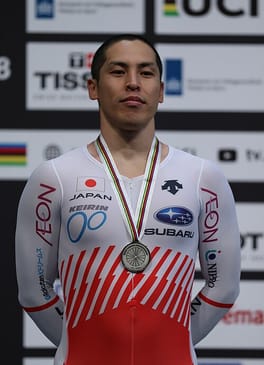
Photo: Nicola / CC BY-SA 4.0 (source: Wikimedia Commons)
My Take
Keirin racing isn't exactly the sport that comes to mind when you think "glamour athlete," but honestly that's kind of what makes Tomoyuki Kawabata interesting to me. Growing up in Kotoura, Tottori, then going through an industrial high school and deciding that a bicycle was going to be his whole career takes a certain kind of stubborn conviction. And keirin is deceptively cerebral; it's not just about who has the biggest engine, it's about track positioning, reading your rivals, knowing exactly when to make your move. A world championship silver in the keirin in 2018 shows how far that conviction took him, and there's something genuinely cool about that.
This take was written by generative AI, one per person, from publicly reported facts (editorial policy). It is a reading of the record, not reporting.
Overview
Tomoyuki Kawabata (born February 7, 1985) is a Japanese track cyclist and professional keirin racer from Kotoura, Tottori Prefecture. After Kurayoshi Technical High School he won national titles in the sprint events before entering the Japan Keirin School, and he won a bronze medal in the team sprint at the 2014 Asian Games and a silver medal in the keirin at the 2018 UCI Track Cycling World Championships.
1. Profile
- Name (English)
- Tomoyuki Kawabata
- Name (Japanese)
- 河端朋之
- Reading
- かわばた ともゆき
- Born
- February 7, 1985 (age 41)
- Origin
- Kotaura, Tottori Prefecture, Japan
- Height
- 170cm
- Occupation
- Cyclist / Keirin Racer
- Zodiac / Chinese zodiac
- Aquarius / Ox
2. Background
- High school
- Tottori Prefectural Kurayoshi Technical High School
3. Links
- Wikipedia (Japanese)https://ja.wikipedia.org/wiki/%E6%B2%B3%E7%AB%AF%E6%9C%8B%E4%B9%8B
- Wikidatahttps://www.wikidata.org/wiki/Q11554070
4. About this entry
Tags
- Last updated
Only publicly available facts are listed; non-public or unconfirmed items are omitted. Base data was compiled from Wikidata from June 2026 onward; ages are recalculated daily and deaths are checked against Wikidata on an ongoing basis. English text is machine-assisted (facts translated by Sonnet, "My Take" written by Opus 4.8). The Japanese page is the source of record.
Frequently asked questions
When was Tomoyuki Kawabata born?
Tomoyuki Kawabata was born on February 7, 1985 and is 41 years old.
Where is Tomoyuki Kawabata from?
Tomoyuki Kawabata is from Kotaura, Tottori Prefecture, Japan.
What does Tomoyuki Kawabata do?
Tomoyuki Kawabata works as Cyclist, Keirin Racer.
How tall is Tomoyuki Kawabata?
Tomoyuki Kawabata is 170 cm tall.
Which high school did Tomoyuki Kawabata attend?
Tomoyuki Kawabata attended Tottori Prefectural Kurayoshi Technical High School.