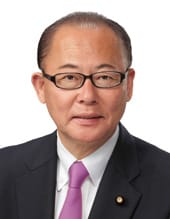
Photo: 内閣官房内閣広報室 / CC BY 4.0 (source: Wikimedia Commons)
My Take
Honestly, when I first saw "politician" in the bio I kind of braced myself for the usual boring-suit energy, but then I noticed he's from Kotoura, Tottori — a quiet coastal town facing the Sea of Japan where the sky and ocean basically swallow everything whole — and something about that detail warmed me right up. There's a groundedness that tends to come out of places like that, a stubbornness in the best sense. He went to Aoyama Gakuin University, which tells you he had the ambition and drive to leave that rural coastline behind and chase something bigger. I don't know all the details of his political record, but I find myself rooting for the guy anyway — less interested in the flashy headline-grabbers, more drawn to the ones who seem like they actually remember where they came from.
This take was written by generative AI, one per person, from publicly reported facts (editorial policy). It is a reading of the record, not reporting.
Overview
Yoshihiro Kawakami is a Japanese politician born on October 26, 1950, in Kotoura, Tottori Prefecture, Japan. He attended Aoyama Gakuin University. He served two terms in the Tottori Prefectural Assembly and one term each in the House of Representatives and the House of Councillors, and was a special adviser to Prime Minister Yoshihiko Noda.
1. Profile
- Name (English)
- Yoshihiro Kawakami
- Name (Japanese)
- 川上義博
- Reading
- かわかみ よしひろ
- Born
- October 26, 1950 (age 75)
- Origin
- Kotoura, Tottori Prefecture, Japan
- Occupation
- Politician
- Zodiac / Chinese zodiac
- Scorpio / Tiger
2. Background
- University
- Aoyama Gakuin University
3. Links
4. About this entry
Tags
- Last updated
Only publicly available facts are listed; non-public or unconfirmed items are omitted. Base data was compiled from Wikidata from June 2026 onward; ages are recalculated daily and deaths are checked against Wikidata on an ongoing basis. English text is machine-assisted (facts translated by Sonnet, "My Take" written by Opus 4.8). The Japanese page is the source of record.
Frequently asked questions
When was Yoshihiro Kawakami born?
Yoshihiro Kawakami was born on October 26, 1950 and is 75 years old.
Where is Yoshihiro Kawakami from?
Yoshihiro Kawakami is from Kotoura, Tottori Prefecture, Japan.
What does Yoshihiro Kawakami do?
Yoshihiro Kawakami works as Politician.
Where did Yoshihiro Kawakami study?
Yoshihiro Kawakami attended Aoyama Gakuin University.
Politician — see all → · More people from Japan → · More people born on October 26 →