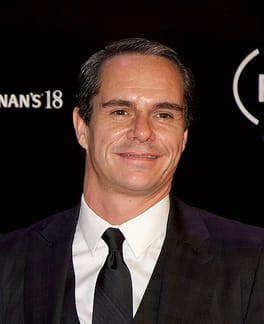
Photo: Milton Martínez / Secretaría de Cultura CDMX / CC BY 4.0 (source: Wikimedia Commons)
Tony Dalton was born in Laredo, Texas, United States on February 13, 1975. Public records list Tony Dalton as a television actor, film actor and stage actor. That works out to 51 years old in 2026.
My Take
What grabs me about Tony Dalton is how late, and how completely, he arrived in the American consciousness. He spent years grinding through Mexican film, television and stage before Lalo Salamanca made him a household menace, and that long apprenticeship is exactly why his villainy feels so lived-in and unforced. The charm and the danger sit on the same face, never one without the other. The fact that he also writes tells me he understands character from the inside out. I find him one of the most quietly fascinating character actors working, and I suspect his richest roles are still ahead of him.
This take was written by generative AI, one per person, from publicly reported facts (editorial policy). It is a reading of the record, not reporting.
1. Profile
- Name (English)
- Tony Dalton
- Name (Japanese)
- トニー・ダルトン
- Reading
- とにー・だるとん
- Born
- February 13, 1975 (age 51)
- Origin
- Laredo, Texas, United States
- Occupation
- actor / television actor / film actor / stage actor / screenwriter
- Zodiac / Chinese zodiac
- Aquarius / Rabbit
2. Links
- Instagramhttps://www.instagram.com/daltonyco/
- Wikipedia (English)https://en.wikipedia.org/wiki/Tony%20Dalton
- Wikidatahttps://www.wikidata.org/wiki/Q3318816
3. About this entry
Tags
- Last updated
Facts are limited to publicly available information up to 2024; non-public or unconfirmed items are omitted. English text is machine-assisted (facts translated by Sonnet, "My Take" written by Opus 4.8). The Japanese page is the source of record.
Frequently asked questions
When was Tony Dalton born?
Tony Dalton was born on February 13, 1975 and is 51 years old.
Where is Tony Dalton from?
Tony Dalton is from Laredo, Texas, United States.
What does Tony Dalton do?
Tony Dalton works as actor, television actor, film actor, stage actor, screenwriter.
Actor — see all → · Television actor — see all → · More people from the United States → · More people born on February 13 →