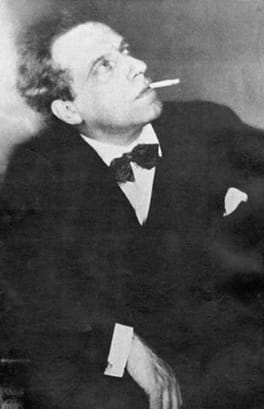
Photo: Original uploader was Jacques-urbanska at fr.wikipedia / Public domain (source: Wikimedia Commons)
Vsevolod Meyerhold was born on January 28, 1874 in Penza, Penza Oblast, Russia. Vsevolod Meyerhold was listed as an actor, theatre director and playwright. Death is recorded on February 2, 1940, at the age of 66. Education on record includes Classical high school number 1 named after V. G. Belinsky and Lomonosov Moscow State University. Recorded honors include People's Artist of the RSFSR.
My Take
Vsevolod Meyerhold is one of the towering, tragic names in theater history for me. His biomechanics, training actors almost like athletes, blew the doors off naturalistic acting and still shapes how performers think about the body on stage. He embraced the Russian Revolution wholeheartedly, only for the Stalinist regime to turn on him, he was arrested and executed in 1940. That ending haunts me every time I revisit his work. The director who reinvented stagecraft, crushed by the very state he served. His ideas survived the man, and modern theater would be unrecognizable without him.
This take was written by generative AI, one per person, from publicly reported facts (editorial policy). It is a reading of the record, not reporting.
1. Profile
- Name (English)
- Vsevolod Meyerhold
- Name (Japanese)
- フセヴォロド・メイエルホリド
- Reading
- ふせゔぉろど・めいえるほりど
- Born
- January 28, 1874 – February 2, 1940
- Origin
- Penza, Penza Oblast, Russia
- Occupation
- actor / theatre director / playwright / politician / film director
- Zodiac / Chinese zodiac
- Aquarius / Dog
2. Background
- High school
- Classical high school number 1 named after V. G. Belinsky
- University
- Lomonosov Moscow State University
Awards & achievements
- People's Artist of the RSFSR
3. Links
4. About this entry
Tags
- Last updated
Facts are limited to publicly available information up to 2024; non-public or unconfirmed items are omitted. English text is machine-assisted (facts translated by Sonnet, "My Take" written by Opus 4.8). The Japanese page is the source of record.
Frequently asked questions
When was Vsevolod Meyerhold born?
Born January 28, 1874.
When did Vsevolod Meyerhold die?
Died February 2, 1940, aged 66.
Where was Vsevolod Meyerhold from?
Vsevolod Meyerhold was from Penza, Penza Oblast, Russia.
What did Vsevolod Meyerhold do?
Vsevolod Meyerhold worked as actor, theatre director, playwright, politician, film director.
Actor — see all → · Theatre director — see all → · More people from Russia →