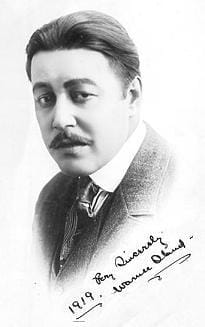
Photo: Unknown author / Public domain (source: Wikimedia Commons)
Born on October 3, 1879, Warner Oland was from Västerbotten County, Sweden. Warner Oland was listed as a film actor, stage actor and translator. Death is recorded on August 6, 1938, at the age of 58.
My Take
Oland is a complicated figure I find genuinely compelling. A Swede born Johan Verner Olund, he became Hollywood's go-to face for Chinese roles, playing Charlie Chan sixteen times alongside Fu Manchu. By modern standards that casting rightly invites scrutiny, and I won't pretend otherwise. Yet the sheer commitment and presence he brought to those parts was real craftsmanship, and his survival through the wrenching shift from silent film to sound speaks to genuine adaptability. I respect him as an actor of his era while holding the discomfort honestly. History rarely offers tidy heroes, and he is no exception.
This take was written by generative AI, one per person, from publicly reported facts (editorial policy). It is a reading of the record, not reporting.
1. Profile
- Name (English)
- Warner Oland
- Name (Japanese)
- ワーナー・オーランド
- Reading
- わーなー・おーらんど
- Born
- October 3, 1879 – August 6, 1938
- Origin
- Västerbotten County, Sweden
- Occupation
- actor / film actor / stage actor / translator
- Zodiac / Chinese zodiac
- Libra / Rabbit
2. Links
- Wikipedia (English)https://en.wikipedia.org/wiki/Warner%20Oland
- Wikidatahttps://www.wikidata.org/wiki/Q23957
3. About this entry
Tags
- Last updated
Facts are limited to publicly available information up to 2024; non-public or unconfirmed items are omitted. English text is machine-assisted (facts translated by Sonnet, "My Take" written by Opus 4.8). The Japanese page is the source of record.
Frequently asked questions
When was Warner Oland born?
Warner Oland was born on October 3, 1879.
When did Warner Oland die?
Warner Oland died on August 6, 1938, aged 58.
Where was Warner Oland from?
Warner Oland was from Västerbotten County, Sweden.
What did Warner Oland do?
Warner Oland worked as actor, film actor, stage actor, translator.
Actor — see all → · Film actor — see all → · More people from Sweden → · More people born on October 3 →