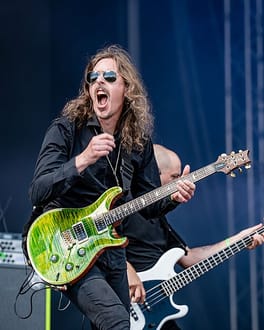
Photo: Birgit Fostervold / CC BY-SA 4.0 (source: Wikimedia Commons)
Mikael Åkerfeldt is a singer, guitarist and record producer. Mikael Åkerfeldt was born in Stockholm, Sweden on April 17, 1974. That works out to 52 years old in 2026.
My Take
I've always thought of Mikael Akerfeldt as one of metal's true polymaths. As the voice and chief songwriter of Opeth, he taught me that a death-metal growl and a tender clean melody can live in the same song without feeling like a gimmick. What impresses me most is the range of his collaborations, from fronting Bloodbath to teaming with Steven Wilson in Storm Corrosion. He strikes me as a Stockholm musician who follows his curiosity wherever it leads, which is probably why Opeth keeps evolving instead of repeating itself. I respect artists who refuse to stay in one lane, and he's a textbook example.
This take was written by generative AI, one per person, from publicly reported facts (editorial policy). It is a reading of the record, not reporting.
1. Profile
- Name (English)
- Mikael Åkerfeldt
- Name (Japanese)
- ミカエル・オーカーフェルト
- Reading
- みかえる・おーかーふぇると
- Born
- April 17, 1974 (age 52)
- Origin
- Stockholm, Sweden
- Occupation
- singer / guitarist / record producer / lyricist
- Zodiac / Chinese zodiac
- Aries / Tiger
2. Links
3. About this entry
Tags
- Last updated
Facts are limited to publicly available information up to 2024; non-public or unconfirmed items are omitted. English text is machine-assisted (facts translated by Sonnet, "My Take" written by Opus 4.8). The Japanese page is the source of record.
Frequently asked questions
When was Mikael Åkerfeldt born?
Born April 17, 1974 (age 52).
Where is Mikael Åkerfeldt from?
Mikael Åkerfeldt is from Stockholm, Sweden.
What does Mikael Åkerfeldt do?
Mikael Åkerfeldt works as singer, guitarist, record producer, lyricist.
Singer — see all → · Guitarist — see all → · More people from Sweden →