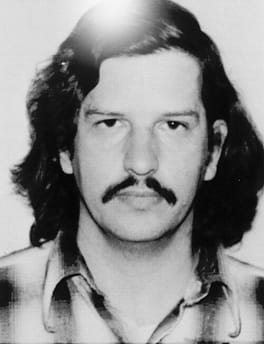
Photo: government unit (including state, county, city, and municipal government agencies) / Public domain (source: Wikimedia Commons)
William Bonin, born on January 8, 1947 in Willimantic, Connecticut, United States, was a truck driver and serial killer. Death is recorded on February 23, 1996, at the age of 49. Education on record includes North High School. Awards on record include Good Conduct Medal.
My Take
William Bonin is one of those cases that haunts you not because of mystery, but because of sheer scale and brazenness. Known as the Freeway Killer, he operated across southern California's highways in the late 1970s, preying on young men and boys, and the fact that he had at least one accomplice in several of the killings makes the whole thing even more chilling — this wasn't a lone, isolated predator but something almost social in its horror. He confessed to 21 murders but was convicted of 14, and the gap between those numbers is its own kind of tragedy. What sticks with me is the contrast: a Good Conduct Medal from the military, then decades later a death sentence carried out in 1996.
This take was written by generative AI, one per person, from publicly reported facts (editorial policy). It is a reading of the record, not reporting.
1. Profile
- Name (English)
- William Bonin
- Name (Japanese)
- ウィリアム・ボニン
- Reading
- うぃりあむ・ぼにん
- Born
- January 8, 1947 – February 23, 1996
- Origin
- Willimantic, Connecticut, United States
- Occupation
- truck driver / serial killer
- Zodiac / Chinese zodiac
- Capricorn / Boar
2. Background
- High school
- North High School
Awards & achievements
- Good Conduct Medal
3. Links
4. About this entry
Tags
- Last updated
Only publicly available facts are listed; non-public or unconfirmed items are omitted. Base data was compiled from Wikidata from June 2026 onward; ages are recalculated daily and deaths are checked against Wikidata on an ongoing basis. English text is machine-assisted (facts translated by Sonnet, "My Take" written by Opus 4.8). The Japanese page is the source of record.
Frequently asked questions
When was William Bonin born?
William Bonin was born on January 8, 1947.
When did William Bonin die?
William Bonin died on February 23, 1996, aged 49.
Where was William Bonin from?
William Bonin was from Willimantic, Connecticut, United States.
What did William Bonin do?
William Bonin worked as truck driver, serial killer.
Which high school did William Bonin attend?
William Bonin attended North High School.
Serial killer — see all → · More people from the United States → · More people born on January 8 →