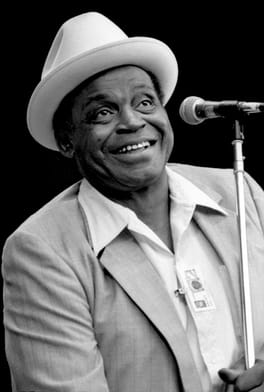
Photo: Brianmcmillen / CC BY-SA 3.0 (source: Wikimedia Commons)
My Take
Willie Dixon is the songwriter behind a staggering share of the blues canon, and it is impossible to overstate his influence on rock and roll. Strip Led Zeppelin, the Stones, Cream and countless others down to their DNA and you keep finding Dixon songs underneath. As the house bassist, writer and producer at Chess, he basically architected the Chicago electric blues sound. I also love that he fought, late in life, to reclaim credit and royalties that artists like him were so often denied. He was a builder of careers and catalogs, not just a performer, and the whole genre owes him.
This take was written by generative AI, one per person, from publicly reported facts (editorial policy). It is a reading of the record, not reporting.
Overview
Willie Dixon (1915-1992) was an American blues musician, songwriter, bassist and producer whose work for Chess Records helped define the Chicago blues sound. He wrote and produced enduring standards such as 'Hoochie Coochie Man,' 'Little Red Rooster,' 'Spoonful' and 'I Just Want to Make Love to You,' which were later covered by rock acts including The Rolling Stones and Led Zeppelin. He was inducted into the Rock and Roll Hall of Fame in 1994.
1. Profile
- Name (English)
- Willie Dixon
- Name (Japanese)
- ウィリー・ディクスン
- Reading
- うぃりー・でぃくすん
- Born
- July 1, 1915 – January 29, 1992
- Origin
- Vicksburg, Mississippi, United States
- Occupation
- Singer-songwriter / Blues musician / Music producer / Boxer / Recording artist
- Zodiac / Chinese zodiac
- Cancer / Rabbit
2. Background
Awards & achievements
- 1994 Rock and Roll Hall of Fame
3. Links
- Official sitehttp://www.willie-dixon.com/
- Wikipedia (English)https://en.wikipedia.org/wiki/Willie%20Dixon
- Wikipedia (Japanese)https://ja.wikipedia.org/wiki/%E3%82%A6%E3%82%A3%E3%83%AA%E3%83%BC%E3%83%BB%E3%83%87%E3%82%A3%E3%82%AF%E3%82%B9%E3%83%B3
- Wikidatahttps://www.wikidata.org/wiki/Q204092
4. About this entry
Tags
- Last updated
Facts are limited to publicly available information up to 2024; non-public or unconfirmed items are omitted. English text is machine-assisted (facts translated by Sonnet, "My Take" written by Opus 4.8). The Japanese page is the source of record.
Frequently asked questions
When was Willie Dixon born?
Born July 1, 1915.
When did Willie Dixon die?
Died January 29, 1992, aged 76.
Where was Willie Dixon from?
Willie Dixon was from Vicksburg, Mississippi, United States.
What did Willie Dixon do?
Willie Dixon worked as Singer-songwriter, Blues musician, Music producer, Boxer, Recording artist.
Singer-songwriter — see all → · More people from the United States →