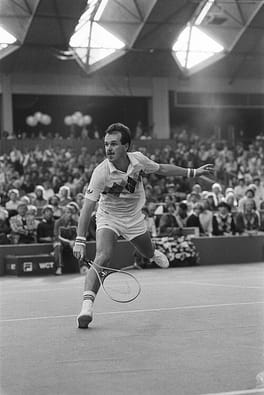
Photo: Marcel Antonisse / Anefo / CC0 (source: Wikimedia Commons)
Wojciech Fibak was born on August 30, 1952 in Poznań, Greater Poland Voivodeship, Poland and is credited as a tennis player, art collector and entrepreneur. That puts Wojciech Fibak at 74 years old in 2026. The listed height is 183 cm.
My Take
Wojciech Fibak is far too interesting to file away as merely a tennis player. Born in Poznań in 1952, he climbed into the world's top ten in singles during an era when leaving the Eastern bloc was no small feat, and built his real fame in doubles alongside Tom Okker and Kim Warwick. What captivates me is his second act: art collector and entrepreneur, a man whose eye and instincts clearly extended well beyond the baseline. I admire people who refuse to be defined by a single talent, and Fibak's blend of athletic discipline and aesthetic, commercial sharpness makes him exactly that sort of richly multifaceted figure.
This take was written by generative AI, one per person, from publicly reported facts (editorial policy). It is a reading of the record, not reporting.
1. Profile
- Name (English)
- Wojciech Fibak
- Name (Japanese)
- ヴォイチェフ・フィバク
- Reading
- ゔぉいちぇふ・ふぃばく
- Born
- August 30, 1952 (age 74)
- Origin
- Poznań, Greater Poland Voivodeship, Poland
- Height
- 183 cm
- Occupation
- tennis player / art collector / entrepreneur
- Zodiac / Chinese zodiac
- Virgo / Dragon
2. Links
3. About this entry
Tags
- Last updated
Facts are limited to publicly available information up to 2024; non-public or unconfirmed items are omitted. English text is machine-assisted (facts translated by Sonnet, "My Take" written by Opus 4.8). The Japanese page is the source of record.
Frequently asked questions
When was Wojciech Fibak born?
Born August 30, 1952 (age 74).
Where is Wojciech Fibak from?
Wojciech Fibak is from Poznań, Greater Poland Voivodeship, Poland.
What does Wojciech Fibak do?
Wojciech Fibak works as tennis player, art collector, entrepreneur.
How tall is Wojciech Fibak?
Wojciech Fibak is 183 cm.
Tennis player — see all → · Art collector — see all → · More people from Poland →