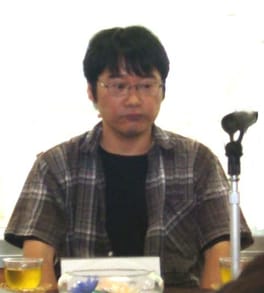
Photo: KASEI / CC BY-SA 3.0 (source: Wikimedia Commons)
My Take
Yoshihide Fujiwara is the kind of manga artist who makes you realize how much craft lives in the shadows of the industry. Born in Tottori in 1966 — a prefecture more famous for sand dunes than pop culture — he won a Shogakukan newcomer prize at 18, then paid his dues as an assistant under two giants, Ryoichi Ikegami and Hiroshi Motomiya, before debuting in his own right. That lineage shows: his linework has always carried a muscular, cinematic weight that fits perfectly in titles like Kneading Practitioner and Conde Coma, stories about fighting men with complicated souls. The fact that he eventually landed at Saito Production as art director on Golgo 13 — one of the longest-running manga in history — feels less like a day job and more like a master craftsman finding his temple. He keeps a low public profile, which honestly suits the work. You don't need the spotlight when the pages speak for themselves.
This take was written by generative AI, one per person, from publicly reported facts (editorial policy). It is a reading of the record, not reporting.
Overview
Yoshihide Fujiwara is a Japanese manga artist born on June 13, 1966, in Tottori Prefecture. He belongs to the generation that grew up during the golden age of boys' manga in Japan. Details about his career debut, agency, and personal life are not publicly disclosed. He maintains a presence on X (formerly Twitter) under the handle @dghnb009.
1. Profile
- Name (English)
- Yoshihide Fujiwara
- Name (Japanese)
- 藤原芳秀
- Reading
- ふじわら よしひで
- Born
- June 13, 1966 (age 60)
- Origin
- Tottori Prefecture, Japan
- Occupation
- Manga artist
- Zodiac / Chinese zodiac
- Gemini / Horse
2. Links
3. About this entry
Tags
- Last updated
Facts are limited to publicly available information up to 2024; non-public or unconfirmed items are omitted. English text is machine-assisted (facts translated by Sonnet, "My Take" written by Opus 4.8). The Japanese page is the source of record.
Frequently asked questions
When was Yoshihide Fujiwara born?
Born June 13, 1966 (age 60).
Where is Yoshihide Fujiwara from?
Yoshihide Fujiwara is from Tottori Prefecture, Japan.
What does Yoshihide Fujiwara do?
Yoshihide Fujiwara works as Manga artist.