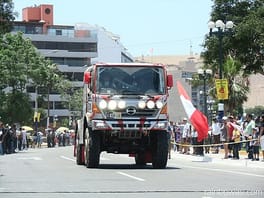
Photo: Rainbowasi from Lima, Peru / CC BY-SA 2.0 (source: Wikimedia Commons)
My Take
Born in 1941 in Otaru, Hokkaido — a port town that once boomed on herring fishing — Yoshimasa Sugawara became a racing driver, and honestly that combination just hits different. The postwar generation had every reason to put their heads down and be sensible, but here's a guy who pointed himself at a racetrack instead. Japanese motorsport in that era was rough, under-resourced, and not exactly glamorous, so the commitment it took to show up and push a car to its limit feels genuinely hardcore to me. I don't know every chapter of his career, but I don't need to — the image of a kid forged by cold Sea of Japan winters, growing up to chase speed for a living, is already a full story.
This take was written by generative AI, one per person, from publicly reported facts (editorial policy). It is a reading of the record, not reporting.
Overview
Yoshimasa Sugawara is a Japanese racing driver born on May 31, 1941, in Otaru, Hokkaido. He is among the generation of motorsport competitors who pursued professional racing during Japan's postwar high-growth era. Details about his career record, agency, and personal life are not publicly available. He is identified by his Wikidata entry and a Japanese Wikipedia article.
1. Profile
- Name (English)
- Yoshimasa Sugawara
- Name (Japanese)
- 菅原義正
- Reading
- すがわら よしまさ
- Born
- May 31, 1941 (age 85)
- Origin
- Otaru, Hokkaido, Japan
- Occupation
- Racing driver
- Zodiac / Chinese zodiac
- Gemini / Snake
2. Links
- Wikipedia (Japanese)https://ja.wikipedia.org/wiki/%E8%8F%85%E5%8E%9F%E7%BE%A9%E6%AD%A3
- Wikidatahttps://www.wikidata.org/wiki/Q4022905
3. About this entry
Tags
- Last updated
Facts are limited to publicly available information up to 2024; non-public or unconfirmed items are omitted. English text is machine-assisted (facts translated by Sonnet, "My Take" written by Opus 4.8). The Japanese page is the source of record.
Frequently asked questions
When was Yoshimasa Sugawara born?
Born May 31, 1941 (age 85).
Where is Yoshimasa Sugawara from?
Yoshimasa Sugawara is from Otaru, Hokkaido, Japan.
What does Yoshimasa Sugawara do?
Yoshimasa Sugawara works as Racing driver.