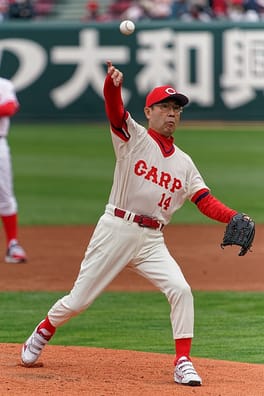
Photo: neko kabachi / CC BY-SA 2.0 (source: Wikimedia Commons)
My Take
I'll be honest, when I hear "right-handed pitcher born in 1945, grew up in postwar Kagoshima," I just sit up a little straighter. This is a guy from Izumi, that quiet crane-wintering town in southern Japan, who came up in an era when playing ball meant grinding it out with nowhere near the facilities or money modern athletes take for granted. At 175cm he was a solid frame for his generation, and I picture the classic workhorse type who pitched on guts and repetition rather than flash. The records here are thin, and I'm not going to invent highlights I can't back up, but the silhouette is unmistakable to me: a stubborn, blue-collar craftsman who said little and just kept throwing. I've always had a soft spot for that kind of unglamorous lifer, and he reads like one to me.
This take was written by generative AI, one per person, from publicly reported facts (editorial policy). It is a reading of the record, not reporting.
Overview
Yoshiro Sotokoba is a Japanese baseball player born on June 1, 1945, in Izumi, Kagoshima Prefecture, Japan. Standing 175 cm tall, he belongs to the Gemini zodiac sign and was born in the Year of the Rooster. Most details of his personal and professional life are not publicly available.
1. Profile
- Name (English)
- Yoshiro Sotokoba
- Name (Japanese)
- 外木場義郎
- Reading
- そとこば よしろう
- Born
- June 1, 1945 (age 81)
- Origin
- Izumi, Kagoshima, Japan
- Height
- 175cm
- Occupation
- Baseball player
- Zodiac / Chinese zodiac
- Gemini / Rooster
2. Links
3. About this entry
Tags
- Last updated
Facts are limited to publicly available information up to 2024; non-public or unconfirmed items are omitted. English text is machine-assisted (facts translated by Sonnet, "My Take" written by Opus 4.8). The Japanese page is the source of record.
Frequently asked questions
When was Yoshiro Sotokoba born?
Born June 1, 1945 (age 81).
Where is Yoshiro Sotokoba from?
Yoshiro Sotokoba is from Izumi, Kagoshima, Japan.
What does Yoshiro Sotokoba do?
Yoshiro Sotokoba works as Baseball player.
How tall is Yoshiro Sotokoba?
Yoshiro Sotokoba is 175 cm.