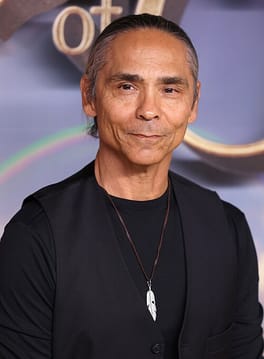
Photo: Gage Skidmore / CC BY-SA 3.0 (source: Wikimedia Commons)
My Take
Zahn McClarnon has one of the most expressive faces in television, able to convey a lifetime of weariness or quiet rage with almost no dialogue, and his lead role in Dark Winds finally gave him the showcase his talent always deserved. I first really noticed him in Fargo's second season as the chilling Hanzee, then again in Westworld, but it's his work centering Native stories that feels most important. He brings dignity and complexity to roles that Hollywood too often flattened into stereotype. After decades of strong supporting turns, watching him carry his own series is deeply satisfying. He is one of the best character actors working.
This take was written by generative AI, one per person, from publicly reported facts (editorial policy). It is a reading of the record, not reporting.
Overview
Zahn McClarnon (born October 24, 1966, in Denver, Colorado) is an American actor of Hunkpapa Lakota descent. He is known for his roles in television series including Longmire, Fargo, Westworld, and as Officer Joe Leaphorn in Dark Winds, as well as voicing characters in projects such as Echo. He is widely recognized for his portrayals of Native American characters.
1. Profile
- Name (English)
- Zahn McClarnon
- Name (Japanese)
- ザーン・マクラーノン
- Reading
- ざーん・まくらーのん
- Born
- October 24, 1966 (age 59)
- Origin
- Denver, Colorado, United States
- Occupation
- Actor / Television actor
- Zodiac / Chinese zodiac
- Scorpio / Horse
2. Background
- High school
- Omaha Central High School
Awards & achievements
- 1996 FAITA Award
- 2006 FAITA Award
- 2015 American Indian Film Festival
3. Links
- Instagramhttps://www.instagram.com/zahnmcclarnon/
- Xhttps://x.com/ZahnMcClarnon
- Wikipedia (English)https://en.wikipedia.org/wiki/Zahn%20McClarnon
- Wikipedia (Japanese)https://ja.wikipedia.org/wiki/%E3%82%B6%E3%83%BC%E3%83%B3%E3%83%BB%E3%83%9E%E3%82%AF%E3%83%A9%E3%83%BC%E3%83%8E%E3%83%B3
- Wikidatahttps://www.wikidata.org/wiki/Q8064709
4. About this entry
Tags
- Last updated
Facts are limited to publicly available information up to 2024; non-public or unconfirmed items are omitted. English text is machine-assisted (facts translated by Sonnet, "My Take" written by Opus 4.8). The Japanese page is the source of record.
Frequently asked questions
When was Zahn McClarnon born?
Born October 24, 1966 (age 59).
Where is Zahn McClarnon from?
Zahn McClarnon is from Denver, Colorado, United States.
What does Zahn McClarnon do?
Zahn McClarnon works as Actor, Television actor.
Actor — see all → · Television actor — see all → · More people from the United States →