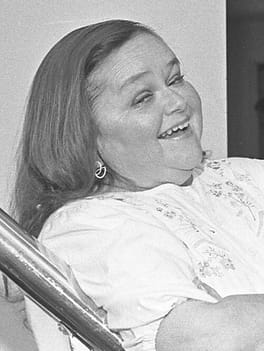
Photo: Marsha Traeger / CC BY 4.0 (source: Wikimedia Commons)
Zelda Rubinstein was listed as a film actor, television actor and voice actor. Zelda Rubinstein was born in Pittsburgh, Pennsylvania, United States on May 28, 1933. Death is recorded on January 27, 2010, at the age of 76. Schooling on record includes Peabody High School and University of Pittsburgh.
My Take
Zelda Rubinstein is one of those performers who burned so brightly in a single iconic role that you can't imagine anyone else doing it — her turn as Tangina Barrons in the Poltergeist franchise is genuinely unforgettable, this small, otherworldly woman delivering lines with an eerie warmth that somehow made the supernatural feel both terrifying and comforting at once. Born in Pittsburgh and trained at the University of Pittsburgh, she carved out a career that defied easy categorization, popping up in everything from horror films to the underrated Picket Fences, where she held her own in David E. Kelley's sharp ensemble week after week. She was also a committed human rights activist, which tells you she had real substance beyond the screen. Gone in 2010, but Tangina's voice still echoes whenever that movie comes on.
This take was written by generative AI, one per person, from publicly reported facts (editorial policy). It is a reading of the record, not reporting.
1. Profile
- Name (English)
- Zelda Rubinstein
- Name (Japanese)
- ゼルダ・ルビンスタイン
- Reading
- ぜるだ・るびんすたいん
- Born
- May 28, 1933 – January 27, 2010
- Origin
- Pittsburgh, Pennsylvania, United States
- Occupation
- actor / film actor / television actor / voice actor
- Zodiac / Chinese zodiac
- Gemini / Rooster
2. Background
- High school
- Peabody High School
- University
- University of Pittsburgh
3. Links
4. About this entry
Tags
- Last updated
Only publicly available facts are listed; non-public or unconfirmed items are omitted. Base data was compiled from Wikidata from June 2026 onward; ages are recalculated daily and deaths are checked against Wikidata on an ongoing basis. English text is machine-assisted (facts translated by Sonnet, "My Take" written by Opus 4.8). The Japanese page is the source of record.
Frequently asked questions
When was Zelda Rubinstein born?
Zelda Rubinstein was born on May 28, 1933.
When did Zelda Rubinstein die?
Zelda Rubinstein died on January 27, 2010, aged 76.
Where was Zelda Rubinstein from?
Zelda Rubinstein was from Pittsburgh, Pennsylvania, United States.
What did Zelda Rubinstein do?
Zelda Rubinstein worked as actor, film actor, television actor, voice actor.
Where did Zelda Rubinstein study?
Zelda Rubinstein attended University of Pittsburgh.
Actor — see all → · Film actor — see all → · More people from the United States → · More people born on May 28 →