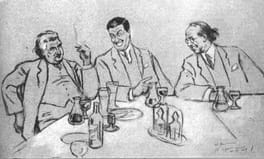
Photo: Hugo Boettinger (1880-1934) / Public domain (source: Wikimedia Commons)
Václav Talich was credited as a conductor, pedagogue and concertmaster. Born on May 28, 1883, Václav Talich was from Kroměříž, Zlín Region, Czech Republic. Death is recorded on March 16, 1961, at the age of 77. Listed accolades include Národní umělec (1957) and Order of Tomáš Garrigue Masaryk, class III (1992).
My Take
Václav Talich is the sort of artist I quietly revere. Being remembered as one of the twentieth century's greatest conductors, with recordings reissued again and again, is a verdict history rarely hands out lightly. What moves me is his arc: violinist, then conductor, then teacher of the next generation. That final turn toward pedagogy tells me he saw music not as a personal trophy but as something to pass on. The Národní umělec honor in 1957 confirms his stature at home, yet the real testament is that his sound still reaches new ears. I would love to sit with one of those reissues and simply listen.
This take was written by generative AI, one per person, from publicly reported facts (editorial policy). It is a reading of the record, not reporting.
1. Profile
- Name (English)
- Václav Talich
- Name (Japanese)
- ヴァーツラフ・ターリヒ
- Reading
- ゔぁーつらふ・たーりひ
- Born
- May 28, 1883 – March 16, 1961
- Origin
- Kroměříž, Zlín Region, Czech Republic
- Occupation
- conductor / pedagogue / concertmaster / music educator / musician
- Zodiac / Chinese zodiac
- Gemini / Goat
2. Background
Awards & achievements
- 1957 Národní umělec
- 1992 Order of Tomáš Garrigue Masaryk, class III
3. Links
4. About this entry
Tags
- Last updated
Facts are limited to publicly available information up to 2024; non-public or unconfirmed items are omitted. English text is machine-assisted (facts translated by Sonnet, "My Take" written by Opus 4.8). The Japanese page is the source of record.
Frequently asked questions
When was Václav Talich born?
Born May 28, 1883.
When did Václav Talich die?
Died March 16, 1961, aged 77.
Where was Václav Talich from?
Václav Talich was from Kroměříž, Zlín Region, Czech Republic.
What did Václav Talich do?
Václav Talich worked as conductor, pedagogue, concertmaster, music educator, musician.
Conductor — see all → · Pedagogue — see all → · More people from the Czech Republic →