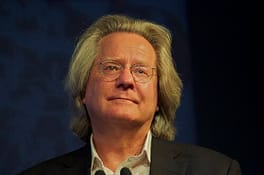
Photo: Ian Scott / CC BY-SA 3.0 (source: Wikimedia Commons)
A. C. Grayling was born on April 3, 1949 in Luanshya, Copperbelt Province, Zambia. A. C. Grayling is credited as a philosopher and university teacher. The age as of 2026 is 77. Education on record includes University of Sussex. Listed accolades include Commander of the Order of the British Empire (2016), Fellow of the Royal Society of Arts and Fellow of the Royal Society of Literature (2006).
My Take
What strikes me about A. C. Grayling is how he refuses to keep philosophy locked inside the university. Born in what is now Zambia, he taught for decades at Birkbeck yet poured just as much energy into books written for ordinary readers. I admire thinkers who treat the public as worthy conversation partners rather than passive audiences, and his Order of the British Empire feels less like an academic laurel than recognition of a man who builds bridges with ideas. To me he represents a humane, accessible intellect that the world quietly needs more of.
This take was written by generative AI, one per person, from publicly reported facts (editorial policy). It is a reading of the record, not reporting.
1. Profile
- Name (English)
- A. C. Grayling
- Name (Japanese)
- A・C・グレイリング
- Reading
- A・C・ぐれいりんぐ
- Born
- April 3, 1949 (age 77)
- Origin
- Luanshya, Copperbelt Province, Zambia
- Occupation
- philosopher / university teacher
- Zodiac / Chinese zodiac
- Aries / Ox
2. Background
- University
- University of Sussex
Awards & achievements
- 2016 Commander of the Order of the British Empire
- Fellow of the Royal Society of Arts
- 2006 Fellow of the Royal Society of Literature
3. Links
- Official sitehttps://www.acgrayling.com
- Wikipedia (English)https://en.wikipedia.org/wiki/A.%20C.%20Grayling
- Wikidatahttps://www.wikidata.org/wiki/Q278583
4. About this entry
Tags
- Last updated
Facts are limited to publicly available information up to 2024; non-public or unconfirmed items are omitted. English text is machine-assisted (facts translated by Sonnet, "My Take" written by Opus 4.8). The Japanese page is the source of record.
Frequently asked questions
When was A. C. Grayling born?
A. C. Grayling was born on April 3, 1949 and is 77 years old.
Where is A. C. Grayling from?
A. C. Grayling is from Luanshya, Copperbelt Province, Zambia.
What does A. C. Grayling do?
A. C. Grayling works as philosopher, university teacher.
Where did A. C. Grayling study?
A. C. Grayling attended University of Sussex.
Philosopher — see all → · University teacher — see all → · More people from Zambia → · More people born on April 3 →