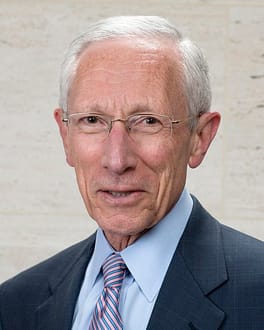
Photo: Federalreserve / Public domain (source: Wikimedia Commons)
Stanley Fischer, born on October 15, 1943 in Mazabuka, Southern Province, Zambia, was an economist, pedagogue and writer. Stanley Fischer died on May 31, 2025, aged 81. Awards on record include Guggenheim Fellowship, Bernhard Harms Prize, Distinguished Fellow of the American Economic Association and 3 more.
My Take
Stanley Fischer is one of those economists whose career reads like a greatest-hits album of modern central banking — and I mean that with full sincerity. Born in what is now Zambia, educated at MIT, he went on to advise the IMF through some of the nastiest financial crises of the 1990s, shaped Israeli monetary policy for nearly a decade as Bank of Israel governor, and then came back to Washington as Federal Reserve vice chair under Janet Yellen. That kind of globe-spanning, institution-hopping influence is extraordinarily rare. What strikes me most is that Fischer isn't just a bureaucrat — he was a genuine academic heavyweight whose former students include Ben Bernanke and Mario Draghi, meaning his intellectual fingerprints are on a huge swath of 21st-century economic policy worldwide.
This take was written by generative AI, one per person, from publicly reported facts (editorial policy). It is a reading of the record, not reporting.
1. Profile
- Name (English)
- Stanley Fischer
- Name (Japanese)
- スタンレー・フィッシャー
- Reading
- すたんれー・ふぃっしゃー
- Born
- October 15, 1943 – May 31, 2025
- Origin
- Mazabuka, Southern Province, Zambia
- Occupation
- economist / pedagogue / writer / banker / university teacher
- Zodiac / Chinese zodiac
- Libra / Goat
2. Background
Awards & achievements
- Guggenheim Fellowship
- Bernhard Harms Prize
- Distinguished Fellow of the American Economic Association
- 1977 Fellow of the Econometric Society
- Fellow of the American Academy of Arts and Sciences
- 2016 Paul A. Volcker Lifetime Achievement Award for Economic Policy
3. Links
- Official sitehttp://www.stanleyfischer.com/
- Wikipedia (English)https://en.wikipedia.org/wiki/Stanley%20Fischer
- Wikipedia (Japanese)https://ja.wikipedia.org/wiki/%E3%82%B9%E3%82%BF%E3%83%B3%E3%83%AC%E3%83%BC%E3%83%BB%E3%83%95%E3%82%A3%E3%83%83%E3%82%B7%E3%83%A3%E3%83%BC
- Wikidatahttps://www.wikidata.org/wiki/Q447236
4. About this entry
Tags
- Last updated
Only publicly available facts are listed; non-public or unconfirmed items are omitted. Base data was compiled from Wikidata from June 2026 onward; ages are recalculated daily and deaths are checked against Wikidata on an ongoing basis. English text is machine-assisted (facts translated by Sonnet, "My Take" written by Opus 4.8). The Japanese page is the source of record.
Frequently asked questions
When was Stanley Fischer born?
Stanley Fischer was born on October 15, 1943.
When did Stanley Fischer die?
Stanley Fischer died on May 31, 2025, aged 81.
Where was Stanley Fischer from?
Stanley Fischer was from Mazabuka, Southern Province, Zambia.
What did Stanley Fischer do?
Stanley Fischer worked as economist, pedagogue, writer, banker, university teacher.
Economist — see all → · Pedagogue — see all → · More people from Zambia → · More people born on October 15 →