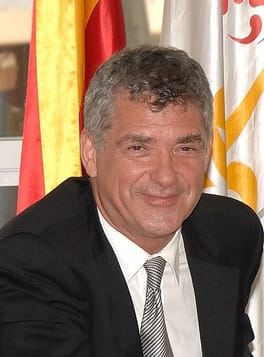
Photo: Javisuar / CC BY-SA 4.0 (source: Wikimedia Commons)
Ángel María Villar is an association football player, sports executive and athlete, born on January 21, 1950 in Bilbao, Biscay, Spain. As of 2026, Ángel María Villar is 76 years old. Schooling on record includes University of Deusto. Recorded honors include Gold Medal of the Royal Order of Sports Merit. The listed height is 179 cm.
My Take
What fascinates me about Ángel María Villar is the rare arc from pitch to power. A decade and 350-plus appearances for Athletic Bilbao would already cement a local legend, but he then ran Spanish football for nearly thirty years as federation president. I find that span almost dizzying. Three decades at the top of any institution invites both admiration and controversy, yet I respect the sheer commitment to one club and one country. A Deusto-educated midfielder who spent his life reading the game and then reshaping its future strikes me as a singularly Spanish kind of figure, devoted and immovable.
This take was written by generative AI, one per person, from publicly reported facts (editorial policy). It is a reading of the record, not reporting.
1. Profile
- Name (English)
- Ángel María Villar
- Name (Japanese)
- アンヘル・マリア・ビジャール
- Reading
- あんへる・まりあ・びじゃーる
- Born
- January 21, 1950 (age 76)
- Origin
- Bilbao, Biscay, Spain
- Height
- 179 cm
- Occupation
- association football player / sports executive / athlete
- Zodiac / Chinese zodiac
- Aquarius / Tiger
2. Background
- University
- University of Deusto
Awards & achievements
- Gold Medal of the Royal Order of Sports Merit
3. Links
- Wikipedia (English)https://en.wikipedia.org/wiki/%C3%81ngel%20Mar%C3%ADa%20Villar
- Wikipedia (Japanese)https://ja.wikipedia.org/wiki/%E3%82%A2%E3%83%B3%E3%83%98%E3%83%AB%E3%83%BB%E3%83%9E%E3%83%AA%E3%82%A2%E3%83%BB%E3%83%93%E3%82%B8%E3%83%A3%E3%83%BC%E3%83%AB
- Wikidatahttps://www.wikidata.org/wiki/Q251805
4. About this entry
Tags
- Last updated
Facts are limited to publicly available information up to 2024; non-public or unconfirmed items are omitted. English text is machine-assisted (facts translated by Sonnet, "My Take" written by Opus 4.8). The Japanese page is the source of record.
Frequently asked questions
When was Ángel María Villar born?
Born January 21, 1950 (age 76).
Where is Ángel María Villar from?
Ángel María Villar is from Bilbao, Biscay, Spain.
What does Ángel María Villar do?
Ángel María Villar works as association football player, sports executive, athlete.
How tall is Ángel María Villar?
Ángel María Villar is 179 cm.
Association football player — see all → · Sports executive — see all → · More people from Spain →