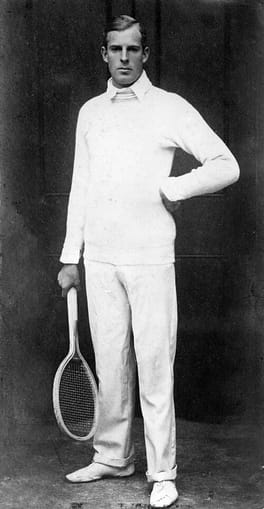
Photo: photographer unidentified / Public domain (source: Wikimedia Commons)
Anthony Wilding was born on October 31, 1883 in Christchurch, New Zealand and was credited as a tennis player, barrister and military officer. Anthony Wilding died on May 9, 1915, aged 31. Schooling on record includes University of Cambridge. Recorded honors include International Tennis Hall of Fame (1978). The listed height was 187 cm.
My Take
Anthony Wilding's story tightens my chest a little. Born in Christchurch in 1883 and hailed as tennis's first true superstar, he was also a Cambridge-educated barrister, a military officer and a cricketer, a breadth of talent that feels almost impossible now. Then 1915 came, and he was killed in action in the First World War at just thirty-one. There is something devastating about a sport's reigning idol being swallowed by that conflict. His 1978 Hall of Fame induction was overdue justice. To me he represents both the elegance and the fragility of an era when tennis was still a gentleman's pursuit, and I do not want that memory to fade.
This take was written by generative AI, one per person, from publicly reported facts (editorial policy). It is a reading of the record, not reporting.
1. Profile
- Name (English)
- Anthony Wilding
- Name (Japanese)
- アンソニー・ワイルディング
- Reading
- あんそにー・わいるでぃんぐ
- Born
- October 31, 1883 – May 9, 1915
- Origin
- Christchurch, New Zealand
- Height
- 187 cm
- Occupation
- tennis player / barrister / military officer / cricketer
- Zodiac / Chinese zodiac
- Scorpio / Goat
2. Background
- University
- University of Cambridge
Awards & achievements
- 1978 International Tennis Hall of Fame
3. Links
- Official sitehttps://www.anthonywilding.com/
- Wikipedia (English)https://en.wikipedia.org/wiki/Anthony%20Wilding
- Wikipedia (Japanese)https://ja.wikipedia.org/wiki/%E3%82%A2%E3%83%B3%E3%82%BD%E3%83%8B%E3%83%BC%E3%83%BB%E3%83%AF%E3%82%A4%E3%83%AB%E3%83%87%E3%82%A3%E3%83%B3%E3%82%B0
- Wikidatahttps://www.wikidata.org/wiki/Q505788
4. About this entry
Tags
- Last updated
Facts are limited to publicly available information up to 2024; non-public or unconfirmed items are omitted. English text is machine-assisted (facts translated by Sonnet, "My Take" written by Opus 4.8). The Japanese page is the source of record.
Frequently asked questions
When was Anthony Wilding born?
Born October 31, 1883.
When did Anthony Wilding die?
Died May 9, 1915, aged 31.
Where was Anthony Wilding from?
Anthony Wilding was from Christchurch, New Zealand.
What did Anthony Wilding do?
Anthony Wilding worked as tennis player, barrister, military officer, cricketer.
How tall was Anthony Wilding?
Anthony Wilding was 187 cm.
Tennis player — see all → · Barrister — see all → · More people from New Zealand →