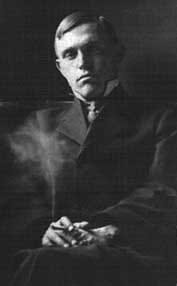
Photo: Unknown author / Public domain (source: Wikimedia Commons)
Damon Runyon was credited as a writer, journalist and film producer. Damon Runyon was born in Manhattan, Kansas, United States on October 4, 1880. Death is recorded on December 10, 1946, at the age of 66. Awards on record include International Boxing Hall of Fame (2002). Credited works include The Idyll of Miss Sarah Brown.
My Take
Runyon is one of my favorite reasons to love old New York writing. He turned Prohibition-era Broadway, its gamblers, hustlers and showgirls, into a whole literary universe with a slangy voice so distinctive that we still say 'a Damon Runyon character' today. That a journalist could create a phrase outliving him by eighty years tells you everything. The seed of Guys and Dolls came from his pen, and his boxing Hall of Fame nod proves the sportswriter's heart was real. I admire most his rare gift: writing about lowlifes with affection rather than contempt.
This take was written by generative AI, one per person, from publicly reported facts (editorial policy). It is a reading of the record, not reporting.
1. Profile
- Name (English)
- Damon Runyon
- Name (Japanese)
- デイモン・ラニアン
- Reading
- でいもん・らにあん
- Born
- October 4, 1880 – December 10, 1946
- Origin
- Manhattan, Kansas, United States
- Occupation
- writer / journalist / film producer
- Zodiac / Chinese zodiac
- Libra / Dragon
2. Background
Awards & achievements
- 2002 International Boxing Hall of Fame
3. Works & records
Filmography / notable works
| Category | Title |
|---|---|
| Notable work | The Idyll of Miss Sarah Brown |
4. Links
5. About this entry
Tags
- Last updated
Facts are limited to publicly available information up to 2024; non-public or unconfirmed items are omitted. English text is machine-assisted (facts translated by Sonnet, "My Take" written by Opus 4.8). The Japanese page is the source of record.
Frequently asked questions
When was Damon Runyon born?
Born October 4, 1880.
When did Damon Runyon die?
Died December 10, 1946, aged 66.
Where was Damon Runyon from?
Damon Runyon was from Manhattan, Kansas, United States.
What did Damon Runyon do?
Damon Runyon worked as writer, journalist, film producer.
What was Damon Runyon known for?
Notable works include The Idyll of Miss Sarah Brown.
Writer — see all → · Journalist — see all → · More people from the United States →