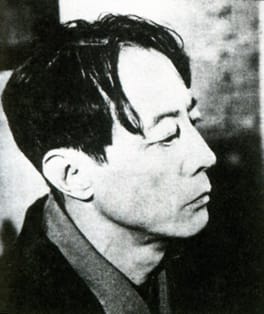
Photo: Unknown author / Public domain (source: Wikimedia Commons)
My Take
I'll be honest, I used to file Sakutarō Hagiwara under "old Japanese poet I should probably respect," and then I actually read him and felt a little ambushed. The guy was born in 1886, an era when poetry was supposed to be stiff and formal, and instead he wrote in plain, almost-spoken language that hits you right in the chest. "Howling at the Moon" alone tells you everything about his wiring, that ache and loneliness sitting just under the surface, and he never flinched from putting it down straight. He died in his mid-fifties, which feels too soon, but he basically cracked open the door for modern colloquial poetry in Japan. Quiet voice, steel spine. I came in expecting homework and left genuinely moved, which is the best kind of surprise.
This take was written by generative AI, one per person, from publicly reported facts (editorial policy). It is a reading of the record, not reporting.
Overview
Sakutarō Hagiwara (1886–1942) was a Japanese poet, novelist, and literary critic born in Kitakurwamachi, Gunma Prefecture. He is widely regarded as a pioneer of modern colloquial-language poetry in Japan, breaking from classical literary conventions to write in the vernacular. His landmark collection Tsuki ni Hoeru (Howling at the Moon) established his reputation as a poet of deep psychological tension and lyrical unease. He attended Keio University and remained active as a writer and critic until his death in 1942 at the age of 55.
1. Profile
- Name (English)
- Sakutarō Hagiwara
- Name (Japanese)
- 萩原朔太郎
- Reading
- はぎわら さくたろう
- Born
- November 1, 1886 – May 11, 1942
- Origin
- Kitakurwamachi, Gunma Prefecture, Japan
- Occupation
- Poet / Novelist / Writer / Literary Critic / Waka Poet
- Zodiac / Chinese zodiac
- Scorpio / Dog
2. Background
- University
- Keio University
3. Works & records
Filmography / notable works
| Category | Title |
|---|---|
| Major Work | Tsuki ni Hoeru (Howling at the Moon) |
4. Links
- Wikipedia (Japanese)https://ja.wikipedia.org/wiki/%E8%90%A9%E5%8E%9F%E6%9C%94%E5%A4%AA%E9%83%8E
- Wikidatahttps://www.wikidata.org/wiki/Q583527
5. About this entry
Tags
- Last updated
Facts are limited to publicly available information up to 2024; non-public or unconfirmed items are omitted. English text is machine-assisted (facts translated by Sonnet, "My Take" written by Opus 4.8). The Japanese page is the source of record.
Frequently asked questions
When was Sakutarō Hagiwara born?
Born November 1, 1886.
When did Sakutarō Hagiwara die?
Died May 11, 1942, aged 55.
Where was Sakutarō Hagiwara from?
Sakutarō Hagiwara was from Kitakurwamachi, Gunma Prefecture, Japan.
What did Sakutarō Hagiwara do?
Sakutarō Hagiwara worked as Poet, Novelist, Writer, Literary Critic, Waka Poet.
What was Sakutarō Hagiwara known for?
Notable works include Tsuki ni Hoeru (Howling at the Moon).
Poet — see all → · Novelist — see all → · More people from Japan →