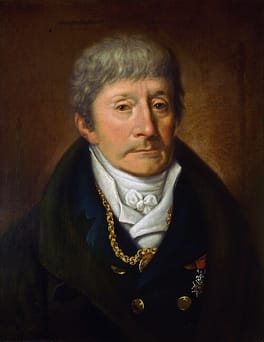
Photo: Joseph Willibrord Mähler / Public domain (source: Wikimedia Commons)
Antonio Salieri was born on August 18, 1750 in Legnago, Province of Verona, Italy. Public records list Antonio Salieri as a composer, conductor and musicologist. Death is recorded on May 7, 1825, at the age of 74. Awards on record include Knight of the Legion of Honour. Notable works include Europa riconosciuta and Il Moro.
My Take
Salieri is history's most unfairly cast figure, and I'd like to argue him out of the villain's chair. Amadeus framed him as the mediocrity who envied Mozart, but the real man was Vienna's court Kapellmeister and a Legion of Honour recipient who taught Beethoven, Schubert, and Liszt. There's a cruel irony in being remembered as someone's rival, yet the students he shaped went on to move the entire course of music. That's the legacy I want to foreground: the quiet greatness of the teacher who builds the soil others bloom in. Salieri deserves to be heard on his own terms, and I intend to listen.
This take was written by generative AI, one per person, from publicly reported facts (editorial policy). It is a reading of the record, not reporting.
1. Profile
- Name (English)
- Antonio Salieri
- Name (Japanese)
- アントニオ・サリエリ
- Reading
- あんとにお・さりえり
- Born
- August 18, 1750 – May 7, 1825
- Origin
- Legnago, Province of Verona, Italy
- Occupation
- composer / conductor / musicologist / music educator / chapelmaster
- Zodiac / Chinese zodiac
- Leo / Horse
2. Background
Awards & achievements
- Knight of the Legion of Honour
3. Works & records
Filmography / notable works
| Category | Title |
|---|---|
| Notable work | Europa riconosciuta |
| Notable work | Il Moro |
4. Links
5. About this entry
Tags
- Last updated
Facts are limited to publicly available information up to 2024; non-public or unconfirmed items are omitted. English text is machine-assisted (facts translated by Sonnet, "My Take" written by Opus 4.8). The Japanese page is the source of record.
Frequently asked questions
When was Antonio Salieri born?
Antonio Salieri was born on August 18, 1750.
When did Antonio Salieri die?
Antonio Salieri died on May 7, 1825, aged 74.
Where was Antonio Salieri from?
Antonio Salieri was from Legnago, Province of Verona, Italy.
What did Antonio Salieri do?
Antonio Salieri worked as composer, conductor, musicologist, music educator, chapelmaster.
What was Antonio Salieri known for?
Antonio Salieri's notable works include Europa riconosciuta, Il Moro.
Composer — see all → · Conductor — see all → · More people from Italy → · More people born on August 18 →