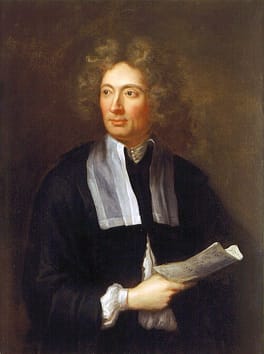
Photo: Hugh Howard (1675-1737) / Public domain (source: Wikimedia Commons)
Arcangelo Corelli was a composer, violist and violinist, born on February 17, 1653 in Fusignano, Province of Ravenna, Italy. Arcangelo Corelli died on January 8, 1713, aged 59. Notable works include Concerti grossi, op. 6 and Twelve Violin Sonatas, Op.5.
My Take
Any conversation about the Baroque has to make room for Arcangelo Corelli. Born in Fusignano in 1653, he did as much as anyone to push the violin to the center of Western music. His Concerti Grossi, Op. 6 and the twelve violin sonatas of Op. 5 became reference points for Vivaldi and Bach alike, which makes him less a composer than a foundation. I'm drawn to his temperament: he favored balance and flawless craftsmanship over flashy storytelling. That music engineered more than three centuries ago still breathes today is, to me, quietly astonishing and a mark of true greatness.
This take was written by generative AI, one per person, from publicly reported facts (editorial policy). It is a reading of the record, not reporting.
1. Profile
- Name (English)
- Arcangelo Corelli
- Name (Japanese)
- アルカンジェロ・コレッリ
- Reading
- あるかんじぇろ・これっり
- Born
- February 17, 1653 – January 8, 1713
- Origin
- Fusignano, Province of Ravenna, Italy
- Occupation
- composer / violist / violinist
- Zodiac / Chinese zodiac
- Aquarius / Snake
2. Works & records
Filmography / notable works
| Category | Title |
|---|---|
| Notable work | Concerti grossi, op. 6 |
| Notable work | Twelve Violin Sonatas, Op.5 |
3. Links
4. About this entry
Tags
- Last updated
Facts are limited to publicly available information up to 2024; non-public or unconfirmed items are omitted. English text is machine-assisted (facts translated by Sonnet, "My Take" written by Opus 4.8). The Japanese page is the source of record.
Frequently asked questions
When was Arcangelo Corelli born?
Arcangelo Corelli was born on February 17, 1653.
When did Arcangelo Corelli die?
Arcangelo Corelli died on January 8, 1713, aged 59.
Where was Arcangelo Corelli from?
Arcangelo Corelli was from Fusignano, Province of Ravenna, Italy.
What did Arcangelo Corelli do?
Arcangelo Corelli worked as composer, violist, violinist.
What was Arcangelo Corelli known for?
Arcangelo Corelli's notable works include Concerti grossi, op. 6, Twelve Violin Sonatas, Op.5.
Composer — see all → · More people from Italy → · More people born on February 17 →