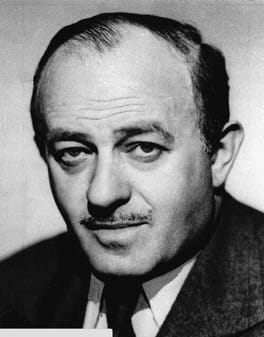
Photo: Publicity still / Public domain (source: Wikimedia Commons)
Born on February 28, 1894, Ben Hecht was from New York City, New York, United States. Public records list Ben Hecht as a screenwriter, novelist and playwright. Death is recorded on April 18, 1964, at the age of 70. Education on record includes Washington Park High School. Listed accolades include Academy Award for Best Story (1929, 1936), Laurel Award for Screenwriting Achievement (1981), New York Film Critics Circle Awards (1936) and 1 more.
My Take
Ben Hecht is one of those names that modern audiences rarely know, yet his fingerprints are all over the films I love. Two Academy Awards for Best Story and credits on roughly seventy films make him a foundational architect of Hollywood screenwriting, and that he came up as a journalist first explains the sharp, fast-talking dialogue people associate with the era. What fascinates me most is the range: thirty-five books, plays, and screenplays all from one restless mind. He's a reminder that some of the most influential people in cinema worked behind the typewriter rather than the camera.
This take was written by generative AI, one per person, from publicly reported facts (editorial policy). It is a reading of the record, not reporting.
1. Profile
- Name (English)
- Ben Hecht
- Name (Japanese)
- ベン・ヘクト
- Reading
- べん・へくと
- Born
- February 28, 1894 – April 18, 1964
- Origin
- New York City, New York, United States
- Occupation
- screenwriter / novelist / playwright / writer / journalist
- Zodiac / Chinese zodiac
- Pisces / Horse
2. Background
- High school
- Washington Park High School
Awards & achievements
- 1929 Academy Award for Best Story
- 1936 Academy Award for Best Story
- 1981 Laurel Award for Screenwriting Achievement
- 1936 New York Film Critics Circle Awards
- 1948 Locarno International Film Festival Awards
3. Links
- Wikipedia (English)https://en.wikipedia.org/wiki/Ben%20Hecht
- Wikipedia (Japanese)https://ja.wikipedia.org/wiki/%E3%83%99%E3%83%B3%E3%83%BB%E3%83%98%E3%82%AF%E3%83%88
- Wikidatahttps://www.wikidata.org/wiki/Q267441
4. About this entry
Tags
- Last updated
Facts are limited to publicly available information up to 2024; non-public or unconfirmed items are omitted. English text is machine-assisted (facts translated by Sonnet, "My Take" written by Opus 4.8). The Japanese page is the source of record.
Frequently asked questions
When was Ben Hecht born?
Born February 28, 1894.
When did Ben Hecht die?
Died April 18, 1964, aged 70.
Where was Ben Hecht from?
Ben Hecht was from New York City, New York, United States.
What did Ben Hecht do?
Ben Hecht worked as screenwriter, novelist, playwright, writer, journalist.
Screenwriter — see all → · Novelist — see all → · More people from the United States →