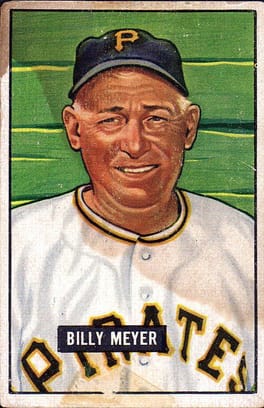
Photo: Unknown author / Public domain (source: Wikimedia Commons)
Billy Meyer was credited as a baseball player. Born on January 14, 1893, Billy Meyer was from Knoxville, Tennessee, United States. Death is recorded on March 31, 1957, at the age of 64.
My Take
Billy Meyer carries what the record books call a dubious distinction, having both played for and later managed two of the worst teams in Major League Baseball history. I read that differently. Staying in the dugout when the talent is thin and the losses pile up takes a stubborn, unglamorous courage that winners rarely have to summon. Born in Knoxville in 1893, he belongs to a vanished era, but the men who shepherd struggling clubs are the ones who quietly hold the sport up. There is dignity in losing well and showing up anyway. I find myself wanting to tip my cap to this kind of overlooked grinder.
This take was written by generative AI, one per person, from publicly reported facts (editorial policy). It is a reading of the record, not reporting.
1. Profile
- Name (English)
- Billy Meyer
- Name (Japanese)
- ビリー・マイヤー
- Reading
- びりー・まいやー
- Born
- January 14, 1893 – March 31, 1957
- Origin
- Knoxville, Tennessee, United States
- Occupation
- baseball player
- Zodiac / Chinese zodiac
- Capricorn / Snake
2. Links
3. About this entry
Tags
- Last updated
Facts are limited to publicly available information up to 2024; non-public or unconfirmed items are omitted. English text is machine-assisted (facts translated by Sonnet, "My Take" written by Opus 4.8). The Japanese page is the source of record.
Frequently asked questions
When was Billy Meyer born?
Born January 14, 1893.
When did Billy Meyer die?
Died March 31, 1957, aged 64.
Where was Billy Meyer from?
Billy Meyer was from Knoxville, Tennessee, United States.
What did Billy Meyer do?
Billy Meyer worked as baseball player.
Baseball player — see all → · More people from the United States →