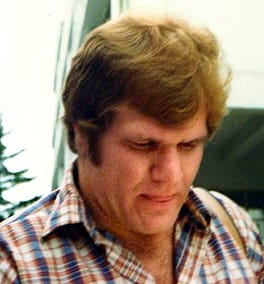
Photo: Sasa21 / CC BY-SA 4.0 (source: Wikimedia Commons)
Brad Rheingans was born in Appleton, Minnesota, United States on December 13, 1953. Brad Rheingans is credited as a coach, amateur wrestler and professional wrestler. That works out to 72 years old in 2026. Schooling on record includes North Dakota State University. The listed height is 178 cm.
My Take
Brad Rheingans is the kind of name wrestling historians treasure. He competed for the United States in Greco-Roman wrestling at both the 1976 and 1980 Olympics, took Pan American gold in 1975 and 1979, and grabbed a 1979 World Championships bronze before turning pro. What I respect most is that amateur pedigree carrying into the pro ranks and then into coaching. The Minnesota wrestler-to-trainer pipeline he represents shaped a generation. To me he's less a household star and more a foundational figure, the sort whose influence shows up in the people he trained rather than the spotlight he chased.
This take was written by generative AI, one per person, from publicly reported facts (editorial policy). It is a reading of the record, not reporting.
1. Profile
- Name (English)
- Brad Rheingans
- Name (Japanese)
- ブラッド・レイガンズ
- Reading
- ぶらっど・れいがんず
- Born
- December 13, 1953 (age 72)
- Origin
- Appleton, Minnesota, United States
- Height
- 178 cm
- Occupation
- coach / amateur wrestler / professional wrestler
- Zodiac / Chinese zodiac
- Sagittarius / Snake
2. Background
- University
- North Dakota State University
3. Links
4. About this entry
Tags
- Last updated
Facts are limited to publicly available information up to 2024; non-public or unconfirmed items are omitted. English text is machine-assisted (facts translated by Sonnet, "My Take" written by Opus 4.8). The Japanese page is the source of record.
Frequently asked questions
When was Brad Rheingans born?
Born December 13, 1953 (age 72).
Where is Brad Rheingans from?
Brad Rheingans is from Appleton, Minnesota, United States.
What does Brad Rheingans do?
Brad Rheingans works as coach, amateur wrestler, professional wrestler.
How tall is Brad Rheingans?
Brad Rheingans is 178 cm.
Coach — see all → · Amateur wrestler — see all → · More people from the United States →