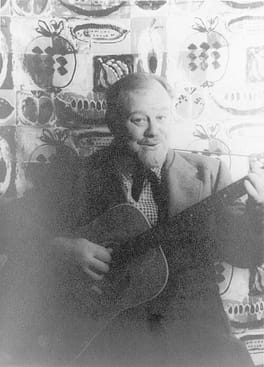
Photo: Carl Van Vechten / Public domain (source: Wikimedia Commons)
Burl Ives was born on June 14, 1909 in Hunt City, Illinois, United States and was credited as a street artist, banjoist and singer. Burl Ives died on April 14, 1995, aged 85. Education on record includes Eastern Illinois University. Awards on record include Academy Award for Best Supporting Actor (1959), Golden Globe Award for Best Supporting Actor – Motion Picture (1958), Grammy Award for Best Country & Western Recording (1962) and 1 more.
My Take
What strikes me about Burl Ives is the sheer span of his career, more than six decades from itinerant folk singer to Oscar-winning actor. I love that he started as a wandering guitarist before his radio show The Wayfaring Stranger turned traditional folk songs into something a wide audience embraced. Picking up an Academy Award and a Golden Globe for supporting roles, plus a Grammy in country music, tells me he refused to be boxed into one lane. The street-performer roots fascinate me most: he carried that raw, storytelling intimacy with him even after the awards started piling up. A genuine American original.
This take was written by generative AI, one per person, from publicly reported facts (editorial policy). It is a reading of the record, not reporting.
1. Profile
- Name (English)
- Burl Ives
- Name (Japanese)
- バール・アイヴス
- Reading
- ばーる・あいゔす
- Born
- June 14, 1909 – April 14, 1995
- Origin
- Hunt City, Illinois, United States
- Occupation
- street artist / banjoist / singer / autobiographer / writer
- Zodiac / Chinese zodiac
- Gemini / Rooster
2. Background
- University
- Eastern Illinois University
Awards & achievements
- 1959 Academy Award for Best Supporting Actor
- 1958 Golden Globe Award for Best Supporting Actor – Motion Picture
- 1962 Grammy Award for Best Country & Western Recording
- Order of Lincoln
3. Links
- Official sitehttp://www.burlives.com/
- Wikipedia (English)https://en.wikipedia.org/wiki/Burl%20Ives
- Wikipedia (Japanese)https://ja.wikipedia.org/wiki/%E3%83%90%E3%83%BC%E3%83%AB%E3%83%BB%E3%82%A2%E3%82%A4%E3%83%B4%E3%82%B9
- Wikidatahttps://www.wikidata.org/wiki/Q315723
4. About this entry
Tags
- Last updated
Facts are limited to publicly available information up to 2024; non-public or unconfirmed items are omitted. English text is machine-assisted (facts translated by Sonnet, "My Take" written by Opus 4.8). The Japanese page is the source of record.
Frequently asked questions
When was Burl Ives born?
Born June 14, 1909.
When did Burl Ives die?
Died April 14, 1995, aged 85.
Where was Burl Ives from?
Burl Ives was from Hunt City, Illinois, United States.
What did Burl Ives do?
Burl Ives worked as street artist, banjoist, singer, autobiographer, writer.
Street artist — see all → · Banjoist — see all → · More people from the United States →