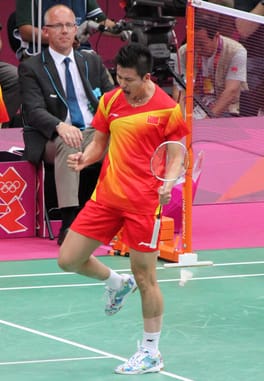
Photo: Cai Yun and Fu Haifeng Win For China! (8172646238).jpg: Antony Stanley / CC BY-SA 2.0 (source: Wikimedia Commons)
Born on January 19, 1980 in Suzhou, People's Republic of China, Cai Yun is a badminton player and Olympic competitor. Cai Yun is 46 years old as of 2026. Listed accolades include Badminton Hall of Fame (2021), Olympic gold medal (2012), Olympic silver medal (2008) and 3 more. The listed height is 181 cm.
My Take
What strikes me about Cai Yun is the patience his career demanded. Men's doubles is the most unforgiving discipline in badminton, where a half-second of misread intent ends the rally, and he sustained excellence in it long enough to win four world titles and finally claim Olympic gold in 2012 after settling for silver in 2008. I admire that arc more than any single highlight reel. Hall of Fame status confirms it, but for me his real legacy is proving that doubles greatness is a craft of trust and longevity, not flash. He is, quietly, one of the finest the sport has produced.
This take was written by generative AI, one per person, from publicly reported facts (editorial policy). It is a reading of the record, not reporting.
1. Profile
- Name (English)
- Cai Yun
- Name (Japanese)
- 蔡贇
- Reading
- さい・いん
- Born
- January 19, 1980 (age 46)
- Origin
- Suzhou, People's Republic of China
- Height
- 181 cm
- Occupation
- badminton player / Olympic competitor
- Zodiac / Chinese zodiac
- Capricorn / Monkey
2. Background
Awards & achievements
- 2021 Badminton Hall of Fame
- 2012 Olympic gold medal
- 2008 Olympic silver medal
- 2009 world champion
- national champion
- Asian champion
3. Links
- Wikipedia (English)https://en.wikipedia.org/wiki/Cai%20Yun
- Wikipedia (Japanese)https://ja.wikipedia.org/wiki/%E8%94%A1%E8%B4%87
- Wikidatahttps://www.wikidata.org/wiki/Q551379
4. About this entry
Tags
- Last updated
Facts are limited to publicly available information up to 2024; non-public or unconfirmed items are omitted. English text is machine-assisted (facts translated by Sonnet, "My Take" written by Opus 4.8). The Japanese page is the source of record.
Frequently asked questions
When was Cai Yun born?
Born January 19, 1980 (age 46).
Where is Cai Yun from?
Cai Yun is from Suzhou, People's Republic of China.
What does Cai Yun do?
Cai Yun works as badminton player, Olympic competitor.
How tall is Cai Yun?
Cai Yun is 181 cm.
Badminton player — see all → · Olympic competitor — see all → · More people from the People's Republic of China →