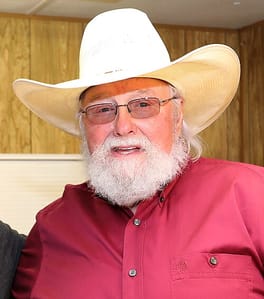
Photo: Office of the Governor of Maryland / CC BY 2.0 (source: Wikimedia Commons)
Charlie Daniels was a guitarist, singer and fiddler, born on October 28, 1936 in Wilmington, North Carolina, United States. Charlie Daniels died on July 6, 2020 at the age of 83. Listed accolades include "Spirit of Americana" Free Speech Award (2006). Notable works include The Devil Went Down to Georgia.
My Take
What I admire most about Charlie Daniels is how he turned a fiddle into a storytelling weapon. The Devil Went Down to Georgia is not just a hit; it is a folk tale set to a blistering hoedown, and only a musician fluent in country, rock, blues, and jazz could pull that off without it sounding like a gimmick. He helped build Southern rock from the ground up yet never lost the front-porch warmth in his playing. He passed in 2020, but for me he remains the model of the unpretentious virtuoso: all grit, no gloss.
This take was written by generative AI, one per person, from publicly reported facts (editorial policy). It is a reading of the record, not reporting.
1. Profile
- Name (English)
- Charlie Daniels
- Name (Japanese)
- チャーリー・ダニエルズ
- Reading
- ちゃーりー・だにえるず
- Born
- October 28, 1936 – July 6, 2020
- Origin
- Wilmington, North Carolina, United States
- Occupation
- guitarist / singer / fiddler / songwriter / singer-songwriter
- Zodiac / Chinese zodiac
- Scorpio / Rat
2. Background
Awards & achievements
- 2006 "Spirit of Americana" Free Speech Award
3. Works & records
Filmography / notable works
| Category | Title |
|---|---|
| Notable work | The Devil Went Down to Georgia |
4. Links
- Official sitehttps://www.charliedaniels.com/
- Instagramhttps://www.instagram.com/thecharliedanielsband/
- Xhttps://x.com/CharlieDaniels
- Wikipedia (English)https://en.wikipedia.org/wiki/Charlie%20Daniels
- Wikipedia (Japanese)https://ja.wikipedia.org/wiki/%E3%83%81%E3%83%A3%E3%83%BC%E3%83%AA%E3%83%BC%E3%83%BB%E3%83%80%E3%83%8B%E3%82%A8%E3%83%AB%E3%82%BA
- Wikidatahttps://www.wikidata.org/wiki/Q551478
5. About this entry
Tags
- Last updated
Facts are limited to publicly available information up to 2024; non-public or unconfirmed items are omitted. English text is machine-assisted (facts translated by Sonnet, "My Take" written by Opus 4.8). The Japanese page is the source of record.
Frequently asked questions
When was Charlie Daniels born?
Born October 28, 1936.
When did Charlie Daniels die?
Died July 6, 2020, aged 83.
Where was Charlie Daniels from?
Charlie Daniels was from Wilmington, North Carolina, United States.
What did Charlie Daniels do?
Charlie Daniels worked as guitarist, singer, fiddler, songwriter, singer-songwriter.
What was Charlie Daniels known for?
Notable works include The Devil Went Down to Georgia.
Guitarist — see all → · Singer — see all → · More people from the United States →