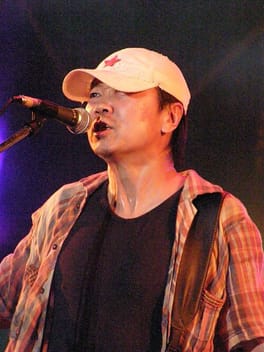
Photo: 楊公 / CC BY-SA 2.0 (source: Wikimedia Commons)
Cui Jian is a singer, composer and actor. Born on August 2, 1961, Cui Jian is from Beijing, People's Republic of China. That works out to 65 years old in 2026. Awards on record include Prince Claus Award and QQ Music Awards.
My Take
What strikes me about Cui Jian is how a single artist can become a fault line in a culture. Born in Beijing in 1961, he didn't just play rock music, he introduced an entire idiom to China and earned the title "Godfather of Chinese Rock" for it. That countercultural weight is the part I keep circling back to: making music that carries political charge takes a different kind of nerve than chasing hits. The Prince Claus Award recognition tells me his reach went beyond the charts. He's also a composer, actor, trumpeter and guitarist, which reads to me like restless curiosity rather than a settled brand.
This take was written by generative AI, one per person, from publicly reported facts (editorial policy). It is a reading of the record, not reporting.
1. Profile
- Name (English)
- Cui Jian
- Name (Japanese)
- 崔健
- Reading
- つい・じぇん
- Born
- August 2, 1961 (age 65)
- Origin
- Beijing, People's Republic of China
- Occupation
- singer / composer / actor / trumpeter / guitarist
- Zodiac / Chinese zodiac
- Leo / Ox
2. Background
Awards & achievements
- Prince Claus Award
- QQ Music Awards
3. Links
- Official sitehttp://www.cuijian.com/
- Wikipedia (English)https://en.wikipedia.org/wiki/Cui%20Jian
- Wikipedia (Japanese)https://ja.wikipedia.org/wiki/%E5%B4%94%E5%81%A5
- Wikidatahttps://www.wikidata.org/wiki/Q540516
4. About this entry
Tags
- Last updated
Facts are limited to publicly available information up to 2024; non-public or unconfirmed items are omitted. English text is machine-assisted (facts translated by Sonnet, "My Take" written by Opus 4.8). The Japanese page is the source of record.
Frequently asked questions
When was Cui Jian born?
Born August 2, 1961 (age 65).
Where is Cui Jian from?
Cui Jian is from Beijing, People's Republic of China.
What does Cui Jian do?
Cui Jian works as singer, composer, actor, trumpeter, guitarist.
Singer — see all → · Composer — see all → · More people from the People's Republic of China →