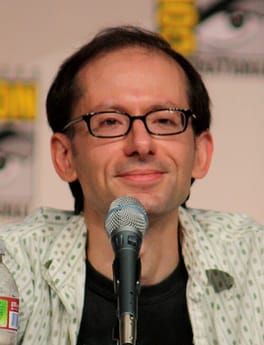
Photo: Gage Skidmore / CC BY-SA 3.0 (source: Wikimedia Commons)
David X. Cohen was born on July 13, 1966 in New York City, New York, United States and is credited as a screenwriter, film producer and writer. That puts David X. Cohen at 60 years old in 2026. Schooling on record includes Dwight Morrow High School and Harvard University.
My Take
David X. Cohen is one of those writers I admire precisely because the intelligence shows through the silliness. A Harvard-trained mind who wrote landmark Simpsons episodes, coined the word cromulent, and then co-created Futurama with Matt Groening, he embodies the rare gift of folding real science into genuinely dumb, delightful comedy. Born in New York in 1966, he helped anchor a golden age of American animated humor. I have always loved creators who refuse to choose between being smart and being absurd, and his craft of turning physics jokes into mass-appeal laughs deserves to be studied and remembered for a long time.
This take was written by generative AI, one per person, from publicly reported facts (editorial policy). It is a reading of the record, not reporting.
1. Profile
- Name (English)
- David X. Cohen
- Name (Japanese)
- デイヴィッド・X・コーエン
- Reading
- でいゔぃっど・X・こーえん
- Born
- July 13, 1966 (age 60)
- Origin
- New York City, New York, United States
- Occupation
- screenwriter / film producer / writer / executive producer
- Zodiac / Chinese zodiac
- Cancer / Horse
2. Background
- High school
- Dwight Morrow High School
- University
- Harvard University
3. Links
- Wikipedia (English)https://en.wikipedia.org/wiki/David%20X.%20Cohen
- Wikidatahttps://www.wikidata.org/wiki/Q455743
4. About this entry
Tags
- Last updated
Facts are limited to publicly available information up to 2024; non-public or unconfirmed items are omitted. English text is machine-assisted (facts translated by Sonnet, "My Take" written by Opus 4.8). The Japanese page is the source of record.
Frequently asked questions
When was David X. Cohen born?
David X. Cohen was born on July 13, 1966 and is 60 years old.
Where is David X. Cohen from?
David X. Cohen is from New York City, New York, United States.
What does David X. Cohen do?
David X. Cohen works as screenwriter, film producer, writer, executive producer.
Where did David X. Cohen study?
David X. Cohen attended Harvard University.
Screenwriter — see all → · Film producer — see all → · More people from the United States → · More people born on July 13 →