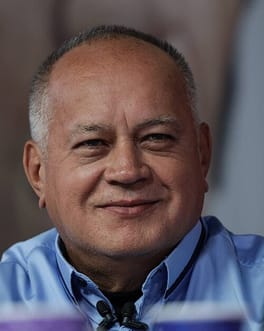
Photo: Con El Mazo Dando, Venezolana de Televisión / Public domain (source: Wikimedia Commons)
Diosdado Cabello was born in Municipio Maturín, Monagas, Venezuela on April 15, 1963. Diosdado Cabello is listed as a politician, television presenter and military personnel. That works out to 63 years old in 2026. Schooling on record includes Andrés Bello Catholic University. Listed accolades include Order of the Liberator and Order of Francisco de Miranda.
My Take
Diosdado Cabello is not a figure I write about with affection, but he demands attention. Few politicians anywhere have survived at the center of power this long: military officer, Speaker of the National Assembly, television host, and since 2024 Venezuela's Minister of Interior. That combination of barracks, parliament and broadcast studio tells you how power actually operates in Caracas. He remains deeply controversial and faces serious accusations abroad, and his weekly TV pulpit is as much a political weapon as entertainment. Whatever your verdict on him, you cannot understand modern Venezuela without studying his durability. To me he is a case study in survival politics.
This take was written by generative AI, one per person, from publicly reported facts (editorial policy). It is a reading of the record, not reporting.
1. Profile
- Name (English)
- Diosdado Cabello
- Name (Japanese)
- ディオスダド・カベリョ
- Reading
- でぃおすだど・かべりょ
- Born
- April 15, 1963 (age 63)
- Origin
- Municipio Maturín, Monagas, Venezuela
- Occupation
- politician / television presenter / military personnel / engineer / vice president
- Zodiac / Chinese zodiac
- Aries / Rabbit
2. Background
- University
- Andrés Bello Catholic University
Awards & achievements
- Order of the Liberator
- Order of Francisco de Miranda
3. Links
- Official sitehttp://diosdadocabello.psuv.org.ve/
- Xhttps://x.com/dcabellor
- Wikipedia (English)https://en.wikipedia.org/wiki/Diosdado%20Cabello
- Wikidatahttps://www.wikidata.org/wiki/Q1227076
4. About this entry
Tags
- Last updated
Facts are limited to publicly available information up to 2024; non-public or unconfirmed items are omitted. English text is machine-assisted (facts translated by Sonnet, "My Take" written by Opus 4.8). The Japanese page is the source of record.
Frequently asked questions
When was Diosdado Cabello born?
Born April 15, 1963 (age 63).
Where is Diosdado Cabello from?
Diosdado Cabello is from Municipio Maturín, Monagas, Venezuela.
What does Diosdado Cabello do?
Diosdado Cabello works as politician, television presenter, military personnel, engineer, vice president.
Politician — see all → · Television presenter — see all → · More people from Venezuela →