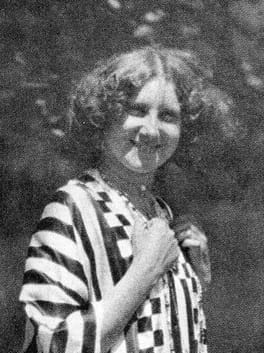
Photo: Heinrich Böhler / Public domain (source: Wikimedia Commons)
Emilie Louise Flöge was born on August 30, 1874 in Vienna, Austria. Public records list Emilie Louise Flöge as a fashion designer, model and art collector. Death is recorded on May 26, 1952, at the age of 77.
My Take
It frustrates me that Emilie Louise Flöge is so often reduced to a footnote in Gustav Klimt's life. She was a working entrepreneur who ran her own Vienna fashion house at a time when independent businesswomen were rare, running the haute couture salon Schwestern Flöge with her sister. To me she is a genuine protagonist of Vienna's fin-de-siècle culture, not merely a muse. Designer, model, art collector and businesswoman all at once, she embodies a modern creative independence that history has been slow to credit. I'd argue she deserves to be remembered firmly on her own terms.
This take was written by generative AI, one per person, from publicly reported facts (editorial policy). It is a reading of the record, not reporting.
1. Profile
- Name (English)
- Emilie Louise Flöge
- Name (Japanese)
- エミーリエ・フレーゲ
- Reading
- えみーりえ・ふれーげ
- Born
- August 30, 1874 – May 26, 1952
- Origin
- Vienna, Austria
- Occupation
- fashion designer / model / art collector / entrepreneur
- Zodiac / Chinese zodiac
- Virgo / Dog
2. Links
- Wikipedia (English)https://en.wikipedia.org/wiki/Emilie%20Louise%20Fl%C3%B6ge
- Wikidatahttps://www.wikidata.org/wiki/Q79147
3. About this entry
Tags
- Last updated
Facts are limited to publicly available information up to 2024; non-public or unconfirmed items are omitted. English text is machine-assisted (facts translated by Sonnet, "My Take" written by Opus 4.8). The Japanese page is the source of record.
Frequently asked questions
When was Emilie Louise Flöge born?
Emilie Louise Flöge was born on August 30, 1874.
When did Emilie Louise Flöge die?
Emilie Louise Flöge died on May 26, 1952, aged 77.
Where was Emilie Louise Flöge from?
Emilie Louise Flöge was from Vienna, Austria.
What did Emilie Louise Flöge do?
Emilie Louise Flöge worked as fashion designer, model, art collector, entrepreneur.
Fashion designer — see all → · Model — see all → · More people from Austria → · More people born on August 30 →