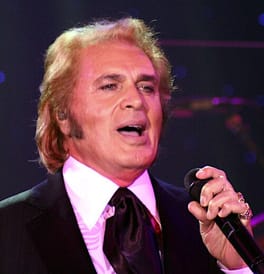
Photo: Wayne Dilger / CC BY 2.0 (source: Wikimedia Commons)
Public records list Engelbert Humperdinck as a singer. Engelbert Humperdinck was born on May 2, 1936 in Chennai, Chennai district, India. That works out to 90 years old in 2026. Recorded honors include star on Hollywood Walk of Fame.
My Take
What I admire most about Engelbert Humperdinck is the audacity of his reinvention. A decade of obscurity as Gerry Dorsey would have broken most performers, yet he borrowed the unwieldy name of a German opera composer and turned it into one of pop's most recognizable brands. To me, Release Me isn't just a hit; it's proof that persistence plus one bold gamble can rewrite a career overnight. I also respect his longevity: still performing toward his nineties, he treats crooning as a craft rather than nostalgia. In an industry obsessed with youth, his stamina feels quietly radical, and his Walk of Fame star well earned.
This take was written by generative AI, one per person, from publicly reported facts (editorial policy). It is a reading of the record, not reporting.
1. Profile
- Name (English)
- Engelbert Humperdinck
- Name (Japanese)
- エンゲルベルト・フンパーディンク
- Reading
- えんげるべると・ふんぱーでぃんく
- Born
- May 2, 1936 (age 90)
- Origin
- Chennai, Chennai district, India
- Occupation
- singer
- Zodiac / Chinese zodiac
- Taurus / Rat
2. Background
Awards & achievements
- star on Hollywood Walk of Fame
3. Links
- Official sitehttps://www.engelbert.com
- Xhttps://x.com/ehumperdinck
- Wikipedia (English)https://en.wikipedia.org/wiki/Engelbert%20Humperdinck%20(singer)
- Wikipedia (Japanese)https://ja.wikipedia.org/wiki/%E3%82%A8%E3%83%B3%E3%82%B2%E3%83%AB%E3%83%99%E3%83%AB%E3%83%88%E3%83%BB%E3%83%95%E3%83%B3%E3%83%91%E3%83%BC%E3%83%87%E3%82%A3%E3%83%B3%E3%82%AF%20(%E6%AD%8C%E6%89%8B)
- Wikidatahttps://www.wikidata.org/wiki/Q221289
4. About this entry
Tags
- Last updated
Facts are limited to publicly available information up to 2024; non-public or unconfirmed items are omitted. English text is machine-assisted (facts translated by Sonnet, "My Take" written by Opus 4.8). The Japanese page is the source of record.
Frequently asked questions
When was Engelbert Humperdinck born?
Born May 2, 1936 (age 90).
Where is Engelbert Humperdinck from?
Engelbert Humperdinck is from Chennai, Chennai district, India.
What does Engelbert Humperdinck do?
Engelbert Humperdinck works as singer.