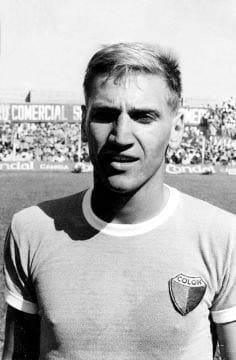
Photo: Unknown author / Public domain (source: Wikimedia Commons)
Enzo Trossero is credited as an association football player and association football coach. Enzo Trossero was born in Buenos Aires, Argentina on May 23, 1953. That works out to 73 years old in 2026. Awards on record include Soccer Coach of the Year Award (Switzerland) (1992).
My Take
What draws me to Enzo Trossero is the full arc of a football life: he didn't just play, he stayed in the game as a coach, and a good one at that, picking up Switzerland's Coach of the Year award in 1992. The nickname El Vikingo hints at a commanding presence on the pitch. To me, the Argentine who learns to win as both a player and a tactician is the most complete kind of football mind. I find quiet, durable craftsmen like him far more compelling than flashier names. He's the sort of professional whose value only becomes obvious in hindsight.
This take was written by generative AI, one per person, from publicly reported facts (editorial policy). It is a reading of the record, not reporting.
1. Profile
- Name (English)
- Enzo Trossero
- Name (Japanese)
- エンソ・トロッセーロ
- Reading
- えんそ・とろっせーろ
- Born
- May 23, 1953 (age 73)
- Origin
- Buenos Aires, Argentina
- Occupation
- association football player / association football coach
- Zodiac / Chinese zodiac
- Gemini / Snake
2. Background
Awards & achievements
- 1992 Soccer Coach of the Year Award (Switzerland)
3. Links
4. About this entry
Tags
- Last updated
Facts are limited to publicly available information up to 2024; non-public or unconfirmed items are omitted. English text is machine-assisted (facts translated by Sonnet, "My Take" written by Opus 4.8). The Japanese page is the source of record.
Frequently asked questions
When was Enzo Trossero born?
Born May 23, 1953 (age 73).
Where is Enzo Trossero from?
Enzo Trossero is from Buenos Aires, Argentina.
What does Enzo Trossero do?
Enzo Trossero works as association football player, association football coach.
Association football player — see all → · Association football coach — see all → · More people from Argentina →