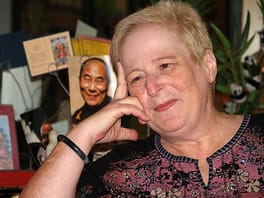
Photo: David Shankbone / CC BY-SA 3.0 (source: Wikimedia Commons)
My Take
Eve Kosofsky Sedgwick is one of those scholars whose ideas quietly reshaped how an entire field thinks. 'Epistemology of the Closet' is genuinely a landmark; her concept of homosocial desire and her later turn toward 'reparative reading' over relentless critique still get argued about in seminar rooms. What I admire most is that she was never a dry theorist, she wrote with real wit, vulnerability and even poetry, including frank work about her own cancer. She made queer theory feel humane rather than merely abstract. Losing her in 2009 robbed the humanities of a singular, generous mind.
This take was written by generative AI, one per person, from publicly reported facts (editorial policy). It is a reading of the record, not reporting.
Overview
Eve Kosofsky Sedgwick (1950-2009) was an American academic, literary critic and poet regarded as a foundational figure in queer theory. Her books 'Between Men' (1985) and 'Epistemology of the Closet' (1990) profoundly shaped gender and sexuality studies. She held a doctorate from Yale University, was awarded a Guggenheim Fellowship in 1987, and taught at institutions including Duke University and the City University of New York Graduate Center.
1. Profile
- Name (English)
- Eve Kosofsky Sedgwick
- Name (Japanese)
- イヴ・セジウィック
- Reading
- いゔ・せじうぃっく
- Born
- May 2, 1950 – April 12, 2009
- Origin
- Dayton, Ohio, United States
- Occupation
- Author / Poet / Literary critic / Women's rights activist / Journalist
- Zodiac / Chinese zodiac
- Taurus / Tiger
2. Background
- University
- Yale University
Awards & achievements
- 1987 Guggenheim Fellowship
3. Links
4. About this entry
Tags
- Last updated
Facts are limited to publicly available information up to 2024; non-public or unconfirmed items are omitted. English text is machine-assisted (facts translated by Sonnet, "My Take" written by Opus 4.8). The Japanese page is the source of record.
Frequently asked questions
When was Eve Kosofsky Sedgwick born?
Born May 2, 1950.
When did Eve Kosofsky Sedgwick die?
Died April 12, 2009, aged 58.
Where was Eve Kosofsky Sedgwick from?
Eve Kosofsky Sedgwick was from Dayton, Ohio, United States.
What did Eve Kosofsky Sedgwick do?
Eve Kosofsky Sedgwick worked as Author, Poet, Literary critic, Women's rights activist, Journalist.
Author — see all → · Poet — see all → · More people from the United States →