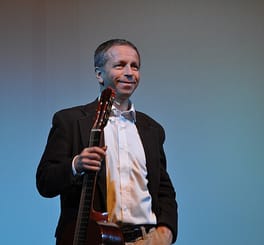
Photo: Cwaste / CC BY-SA 3.0 (source: Wikimedia Commons)
Göran Söllscher is a musician, university teacher and classical guitarist, born on December 31, 1955 in Växjö, Kronoberg County, Sweden. As of 2026, Göran Söllscher is 70 years old. Awards on record include Litteris et Artibus (2007).
My Take
Listening to Goran Sollscher feels like breathing crisp Nordic air. Born in Vaxjo, Sweden in 1955 and trained in Copenhagen, he announced himself by winning the Paris international guitar competition at just twenty-three. What I love is his range, moving from Bach to the Beatles with equal sincerity, and his command of the unusual eleven-string instrument that gives his sound a world all its own. Awarded the Litteris et Artibus medal in 2007, he never plays to show off; the affection for the music itself glows through every phrase. Quiet masters like him are exactly my kind of artist.
This take was written by generative AI, one per person, from publicly reported facts (editorial policy). It is a reading of the record, not reporting.
1. Profile
- Name (English)
- Göran Söllscher
- Name (Japanese)
- イェラン・セルシェル
- Reading
- いぇらん・せるしぇる
- Born
- December 31, 1955 (age 70)
- Origin
- Växjö, Kronoberg County, Sweden
- Occupation
- musician / university teacher / classical guitarist / music arranger
- Zodiac / Chinese zodiac
- Capricorn / Goat
2. Background
Awards & achievements
- 2007 Litteris et Artibus
3. Links
4. About this entry
Tags
- Last updated
Facts are limited to publicly available information up to 2024; non-public or unconfirmed items are omitted. English text is machine-assisted (facts translated by Sonnet, "My Take" written by Opus 4.8). The Japanese page is the source of record.
Frequently asked questions
When was Göran Söllscher born?
Born December 31, 1955 (age 70).
Where is Göran Söllscher from?
Göran Söllscher is from Växjö, Kronoberg County, Sweden.
What does Göran Söllscher do?
Göran Söllscher works as musician, university teacher, classical guitarist, music arranger.
Musician — see all → · University teacher — see all → · More people from Sweden →