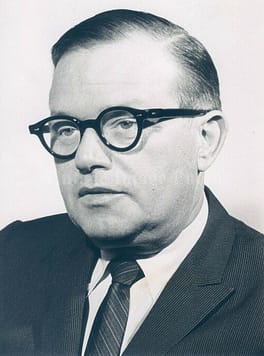
Photo: Unknown author / Public domain (source: Wikimedia Commons)
Jule Styne was listed as a songwriter, film score composer and musician. Jule Styne was born in London, United Kingdom on December 31, 1905. Death is recorded on September 20, 1994, at the age of 88. Awards on record include Kennedy Center Honors, Johnny Mercer Award (1993), Academy Award for Best Original Song (1955) and 1 more. Credited works include Gypsy: A Musical Fable and One Night Stand.
My Take
What strikes me about Jule Styne is staying power. Anyone can write a hit; very few write melodies that the public keeps singing decades after the composer is gone. Gypsy, Funny Girl, and Gentlemen Prefer Blondes are not period curiosities but living theater, constantly revived and refilmed. I admire that the awards almost feel secondary to the real achievement: an instinct for the hummable line. As an English-born talent who conquered Broadway, he embodies the immigrant artist remaking American song. He spent nearly nine decades chasing melody, and the durability of that catalog is the truest measure of his gift.
This take was written by generative AI, one per person, from publicly reported facts (editorial policy). It is a reading of the record, not reporting.
1. Profile
- Name (English)
- Jule Styne
- Name (Japanese)
- ジューリー・スタイン
- Reading
- じゅーりー・すたいん
- Born
- December 31, 1905 – September 20, 1994
- Origin
- London, United Kingdom
- Occupation
- composer / songwriter / film score composer / musician
- Zodiac / Chinese zodiac
- Capricorn / Snake
2. Background
Awards & achievements
- Kennedy Center Honors
- 1993 Johnny Mercer Award
- 1955 Academy Award for Best Original Song
- 1968 Tony Award for Best Original Score
3. Works & records
Filmography / notable works
| Category | Title |
|---|---|
| Notable work | Gypsy: A Musical Fable |
| Notable work | One Night Stand |
4. Links
- Official sitehttps://www.julestyne.com/
- Wikipedia (English)https://en.wikipedia.org/wiki/Jule%20Styne
- Wikipedia (Japanese)https://ja.wikipedia.org/wiki/%E3%82%B8%E3%83%A5%E3%83%BC%E3%83%AA%E3%83%BC%E3%83%BB%E3%82%B9%E3%82%BF%E3%82%A4%E3%83%B3
- Wikidatahttps://www.wikidata.org/wiki/Q587741
5. About this entry
Tags
- Last updated
Facts are limited to publicly available information up to 2024; non-public or unconfirmed items are omitted. English text is machine-assisted (facts translated by Sonnet, "My Take" written by Opus 4.8). The Japanese page is the source of record.
Frequently asked questions
When was Jule Styne born?
Born December 31, 1905.
When did Jule Styne die?
Died September 20, 1994, aged 88.
Where was Jule Styne from?
Jule Styne was from London, United Kingdom.
What did Jule Styne do?
Jule Styne worked as composer, songwriter, film score composer, musician.
What was Jule Styne known for?
Notable works include Gypsy: A Musical Fable, One Night Stand.
Composer — see all → · Songwriter — see all → · More people from the United Kingdom →