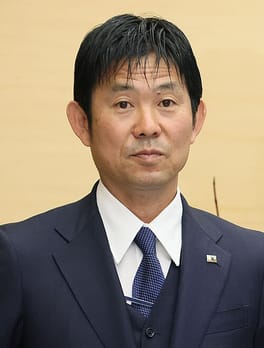
Photo: 内閣官房内閣広報室 / CC BY 4.0 (source: Wikimedia Commons)
Hajime Moriyasu is credited as an association football player and association football coach. Born on August 23, 1968, Hajime Moriyasu is from Kakegawa, Shizuoka Prefecture, Japan. The age as of 2026 is 58. Schooling on record includes Nagasaki Nihon University High School. The listed height is 174 cm.
My Take
Hajime Moriyasu interests me precisely because he was never a flashy star as a player. More than 250 appearances over 14 years at Sanfrecce Hiroshima, plus 35 caps, mark him as a diligent, team-first midfielder, and I suspect that shaped his coaching philosophy. Managing the Japan national team invites relentless criticism, yet he keeps a steady hand. I value managers who think about the whole system rather than individual brilliance, and his calm, unshowy temperament feels like a genuine asset. To me, his quiet resilience under pressure is more impressive than any single tactical flourish.
This take was written by generative AI, one per person, from publicly reported facts (editorial policy). It is a reading of the record, not reporting.
1. Profile
- Name (English)
- Hajime Moriyasu
- Name (Japanese)
- 森保一
- Reading
- もりやす はじめ
- Born
- August 23, 1968 (age 58)
- Origin
- Kakegawa, Shizuoka Prefecture, Japan
- Height
- 174 cm
- Occupation
- association football player / association football coach
- Zodiac / Chinese zodiac
- Virgo / Monkey
2. Background
- High school
- Nagasaki Nihon University High School
3. Links
- Wikipedia (English)https://en.wikipedia.org/wiki/Hajime%20Moriyasu
- Wikipedia (Japanese)https://ja.wikipedia.org/wiki/%E6%A3%AE%E4%BF%9D%E4%B8%80
- Wikidatahttps://www.wikidata.org/wiki/Q2428403
4. About this entry
Tags
- Last updated
Facts are limited to publicly available information up to 2024; non-public or unconfirmed items are omitted. English text is machine-assisted (facts translated by Sonnet, "My Take" written by Opus 4.8). The Japanese page is the source of record.
Frequently asked questions
When was Hajime Moriyasu born?
Hajime Moriyasu was born on August 23, 1968 and is 58 years old.
Where is Hajime Moriyasu from?
Hajime Moriyasu is from Kakegawa, Shizuoka Prefecture, Japan.
What does Hajime Moriyasu do?
Hajime Moriyasu works as association football player, association football coach.
How tall is Hajime Moriyasu?
Hajime Moriyasu is 174 cm tall.
Which high school did Hajime Moriyasu attend?
Hajime Moriyasu attended Nagasaki Nihon University High School.
Association football player — see all → · Association football coach — see all → · More people from Japan → · More people born on August 23 →