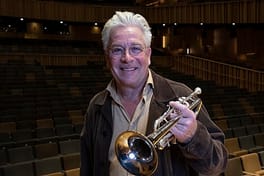
Photo: Johan Wessman / News Oresund / CC BY 2.0 (source: Wikimedia Commons)
Håkan Hardenberger is a trumpeter, music arranger and musician, born on October 27, 1961 in Malmö, Skåne County, Sweden. That puts Håkan Hardenberger at 64 years old in 2026. Recorded honors include Litteris et Artibus (2003) and Royal Philharmonic Society Award (Instrumentalist) (1990).
My Take
Hardenberger is, to my mind, one of those rare instrumentalists who didn't just master his horn but expanded what people thought it could do. A Malmö-born Swede now teaching at the Malmö Academy of Music, he's collected serious honors from the Royal Philharmonic Society Award to Litteris et Artibus. But the real measure of him is how many living composers have written concertos specifically for him. That makes him a co-author of the modern trumpet repertoire, not just a performer of it. I find that kind of quiet, generation-defining devotion to a single instrument genuinely moving.
This take was written by generative AI, one per person, from publicly reported facts (editorial policy). It is a reading of the record, not reporting.
1. Profile
- Name (English)
- Håkan Hardenberger
- Name (Japanese)
- ホーカン・ハーデンベルガー
- Reading
- ほーかん・はーでんべるがー
- Born
- October 27, 1961 (age 64)
- Origin
- Malmö, Skåne County, Sweden
- Occupation
- trumpeter / music arranger / musician
- Zodiac / Chinese zodiac
- Scorpio / Ox
2. Background
Awards & achievements
- 2003 Litteris et Artibus
- 1990 Royal Philharmonic Society Award (Instrumentalist)
3. Links
4. About this entry
Tags
- Last updated
Facts are limited to publicly available information up to 2024; non-public or unconfirmed items are omitted. English text is machine-assisted (facts translated by Sonnet, "My Take" written by Opus 4.8). The Japanese page is the source of record.
Frequently asked questions
When was Håkan Hardenberger born?
Born October 27, 1961 (age 64).
Where is Håkan Hardenberger from?
Håkan Hardenberger is from Malmö, Skåne County, Sweden.
What does Håkan Hardenberger do?
Håkan Hardenberger works as trumpeter, music arranger, musician.
Trumpeter — see all → · Music arranger — see all → · More people from Sweden →