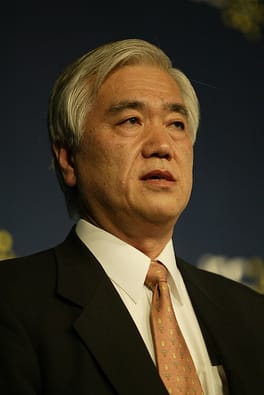
Photo: St. Gallen Symposium / CC BY-SA 4.0 (source: Wikimedia Commons)
My Take
Hiroshi Watanabe is one of those economists you probably wouldn't recognize on the street, and honestly that feels like kind of the point. Born in Tokyo in 1949, he came up through the University of Tokyo — which, as credentials go, doesn't get more serious in Japan — and built his career during one of the wildest economic rides in modern history: postwar recovery, the miracle growth years, the bubble, the bust. Living through all of that as an economist isn't just a résumé footnote, it's basically a front-row seat to the whole story. He lived it not from a lecture hall but inside the Ministry of Finance, rising to its top international post before running the Japan Bank for International Cooperation, and I respect that kind of head-down public service.
This take was written by generative AI, one per person, from publicly reported facts (editorial policy). It is a reading of the record, not reporting.
Overview
Hiroshi Watanabe (born June 26, 1949, in Tokyo) is a Japanese former Ministry of Finance official and economist. A University of Tokyo law graduate, he joined the Ministry of Finance in 1972, served as Vice Minister of Finance for International Affairs from 2004 to 2007, and was governor of the Japan Bank for International Cooperation from 2013 to 2016. Since 2016 he has chaired the Institute for International Monetary Affairs.
1. Profile
- Name (English)
- Hiroshi Watanabe
- Name (Japanese)
- 渡辺博史
- Reading
- わたなべ ひろし
- Born
- June 26, 1949 (age 77)
- Origin
- Bunkyo, Tokyo, Japan
- Occupation
- Bureaucrat
- Zodiac / Chinese zodiac
- Cancer / Ox
2. Background
- University
- University of Tokyo
3. Links
- Wikipedia (Japanese)https://ja.wikipedia.org/wiki/%E6%B8%A1%E9%82%8A%E5%8D%9A%E5%8F%B2
- Wikidatahttps://www.wikidata.org/wiki/Q5384468
4. About this entry
Tags
- Last updated
Only publicly available facts are listed; non-public or unconfirmed items are omitted. Base data was compiled from Wikidata from June 2026 onward; ages are recalculated daily and deaths are checked against Wikidata on an ongoing basis. English text is machine-assisted (facts translated by Sonnet, "My Take" written by Opus 4.8). The Japanese page is the source of record.
Frequently asked questions
When was Hiroshi Watanabe born?
Hiroshi Watanabe was born on June 26, 1949 and is 77 years old.
Where is Hiroshi Watanabe from?
Hiroshi Watanabe is from Bunkyo, Tokyo, Japan.
What does Hiroshi Watanabe do?
Hiroshi Watanabe works as Bureaucrat.
Where did Hiroshi Watanabe study?
Hiroshi Watanabe attended University of Tokyo.
Bureaucrat — see all → · More people from Japan → · More people born on June 26 →