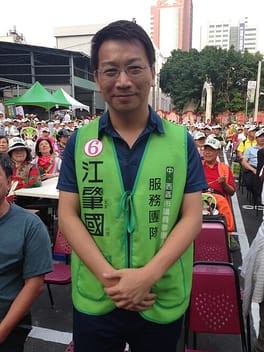
Photo: 勤岸 / CC BY-SA 3.0 (source: Wikimedia Commons)
Hsu Yung-ming is listed as a politician and political scientist. Born on May 12, 1966, Hsu Yung-ming is from Taichung County, Taiwan. The age as of 2026 is 60. Education on record includes National Taiwan University.
My Take
Hsu Yung-ming fascinates me because he crossed a line most people only theorize about. A National Taiwan University political scientist and pollster, he didn't stay safely behind the data; he ran, won a Legislative Yuan seat in 2016, and rose to chair the New Power Party. Moving from studying elections to actually winning them takes a rare kind of nerve. His removal and departure from the party in 2020 show how brutal real politics can be, even for someone who understands its mechanics. To me he embodies the restless idealism of Taiwan's younger political wave, and I respect the leap he took.
This take was written by generative AI, one per person, from publicly reported facts (editorial policy). It is a reading of the record, not reporting.
1. Profile
- Name (English)
- Hsu Yung-ming
- Name (Japanese)
- 徐永明
- Reading
- じょ・えいめい
- Born
- May 12, 1966 (age 60)
- Origin
- Taichung County, Taiwan
- Occupation
- politician / political scientist
- Zodiac / Chinese zodiac
- Taurus / Horse
2. Background
- University
- National Taiwan University
3. Links
- Wikipedia (English)https://en.wikipedia.org/wiki/Hsu%20Yung-ming
- Wikipedia (Japanese)https://ja.wikipedia.org/wiki/%E5%BE%90%E6%B0%B8%E6%98%8E
- Wikidatahttps://www.wikidata.org/wiki/Q8967661
4. About this entry
Tags
- Last updated
Facts are limited to publicly available information up to 2024; non-public or unconfirmed items are omitted. English text is machine-assisted (facts translated by Sonnet, "My Take" written by Opus 4.8). The Japanese page is the source of record.
Frequently asked questions
When was Hsu Yung-ming born?
Born May 12, 1966 (age 60).
Where is Hsu Yung-ming from?
Hsu Yung-ming is from Taichung County, Taiwan.
What does Hsu Yung-ming do?
Hsu Yung-ming works as politician, political scientist.
Politician — see all → · Political scientist — see all → · More people from Taiwan →