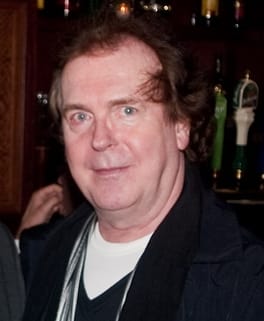
Photo: Richard Bourgerie / CC BY 2.0 (source: Wikimedia Commons)
Born on June 25, 1946, Ian McDonald was from Osterley, United Kingdom. Ian McDonald was a saxophonist, guitarist and multi-instrumentalist. Death is recorded on February 9, 2022, at the age of 75.
My Take
Ian McDonald is one of those musicians whose fingerprints are all over rock history, yet he rarely got the marquee credit he deserved. I think about the opening of "21st Century Schizoid Man" — that ferocious, almost violent sax line he laid down as a founding member of King Crimson in 1968 — and it still sounds like nothing else from that era. Then he helped launch Foreigner in 1976, a hard rock band a world away from prog. The range is genuinely remarkable. He passed in February 2022, and what strikes me most looking back is how quietly essential he was — the kind of player who shapes the sound of two legendary bands and somehow stays humble about the whole thing. Rock music is measurably better because Ian McDonald existed.
This take was written by generative AI, one per person, from publicly reported facts (editorial policy). It is a reading of the record, not reporting.
1. Profile
- Name (English)
- Ian McDonald
- Name (Japanese)
- イアン・マクドナルド
- Reading
- いあん・まくどなるど
- Born
- June 25, 1946 – February 9, 2022
- Origin
- Osterley, United Kingdom
- Occupation
- saxophonist / guitarist / multi-instrumentalist / musician / composer
- Zodiac / Chinese zodiac
- Cancer / Dog
2. Links
- Wikipedia (English)https://en.wikipedia.org/wiki/Ian%20McDonald%20(musician)
- Wikipedia (Japanese)https://ja.wikipedia.org/wiki/%E3%82%A4%E3%82%A2%E3%83%B3%E3%83%BB%E3%83%9E%E3%82%AF%E3%83%89%E3%83%8A%E3%83%AB%E3%83%89%20(%E3%83%9F%E3%83%A5%E3%83%BC%E3%82%B8%E3%82%B7%E3%83%A3%E3%83%B3)
- Wikidatahttps://www.wikidata.org/wiki/Q464833
3. About this entry
Tags
- Last updated
Only publicly available facts are listed; non-public or unconfirmed items are omitted. Base data was compiled from Wikidata from June 2026 onward; ages are recalculated daily and deaths are checked against Wikidata on an ongoing basis. English text is machine-assisted (facts translated by Sonnet, "My Take" written by Opus 4.8). The Japanese page is the source of record.
Frequently asked questions
When was Ian McDonald born?
Ian McDonald was born on June 25, 1946.
When did Ian McDonald die?
Ian McDonald died on February 9, 2022, aged 75.
Where was Ian McDonald from?
Ian McDonald was from Osterley, United Kingdom.
What did Ian McDonald do?
Ian McDonald worked as saxophonist, guitarist, multi-instrumentalist, musician, composer.
Saxophonist — see all → · Guitarist — see all → · More people from the United Kingdom → · More people born on June 25 →