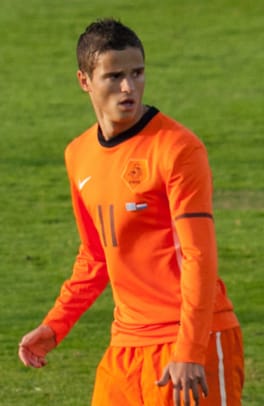
Photo: Jimmy Baikovicius / CC BY-SA 2.0 (source: Wikimedia Commons)
Ibrahim Afellay is an association football player and association football coach. Ibrahim Afellay was born in Utrecht, Netherlands on April 2, 1986. The age as of 2026 is 40. The listed height is 180 cm.
My Take
Ibrahim Afellay is, for me, one of football's great what-ifs. The Moroccan-Dutch playmaker from Utrecht broke through at PSV and then earned a move to Barcelona, which alone tells you how high his ceiling was. The trouble is injuries kept robbing him of momentum, and I always watched him with a tinge of regret, wondering how dazzling a fully fit Afellay could have been. Now he's moved into punditry and coaching, and I'm genuinely curious how that delicate technical intelligence translates to teaching the next generation. He's a reminder that talent can be cruelly fragile, and that the body, not the gift, often writes the ending.
This take was written by generative AI, one per person, from publicly reported facts (editorial policy). It is a reading of the record, not reporting.
1. Profile
- Name (English)
- Ibrahim Afellay
- Name (Japanese)
- イブラヒム・アフェレイ
- Reading
- いぶらひむ・あふぇれい
- Born
- April 2, 1986 (age 40)
- Origin
- Utrecht, Netherlands
- Height
- 180 cm
- Occupation
- association football player / association football coach
- Zodiac / Chinese zodiac
- Aries / Tiger
2. Links
3. About this entry
Tags
- Last updated
Facts are limited to publicly available information up to 2024; non-public or unconfirmed items are omitted. English text is machine-assisted (facts translated by Sonnet, "My Take" written by Opus 4.8). The Japanese page is the source of record.
Frequently asked questions
When was Ibrahim Afellay born?
Born April 2, 1986 (age 40).
Where is Ibrahim Afellay from?
Ibrahim Afellay is from Utrecht, Netherlands.
What does Ibrahim Afellay do?
Ibrahim Afellay works as association football player, association football coach.
How tall is Ibrahim Afellay?
Ibrahim Afellay is 180 cm.
Association football player — see all → · Association football coach — see all → · More people from the Netherlands →