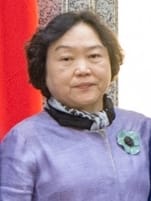
Photo: 立法院 / Attribution (source: Wikimedia Commons)
Born on November 11, 1953 in Gyodong-myeon, South Korea, In Jae-keun is a politician. As of 2026, In Jae-keun is 72 years old. Education on record includes Ewha Womans University. Listed accolades include Robert F. Kennedy Human Rights Award (1987).
My Take
In Jae-keun's story moves me more than almost any entry I have written. When her husband Kim Geun-tae was arrested and tortured under Chun Doo-hwan's regime, she chose to expose his detention to the world, an act of staggering courage against a military dictatorship. The 1987 Robert F. Kennedy Human Rights Award she shared with him was global recognition of that fight. She later became a politician in her own right, carrying the democracy struggle into the halls of power. This is not celebrity glamour; it is the genuine article, and I find myself deeply humbled by it.
This take was written by generative AI, one per person, from publicly reported facts (editorial policy). It is a reading of the record, not reporting.
1. Profile
- Name (English)
- In Jae-keun
- Name (Japanese)
- 印在謹
- Reading
- いん・じぇぐん
- Born
- November 11, 1953 (age 72)
- Origin
- Gyodong-myeon, South Korea
- Occupation
- politician
- Zodiac / Chinese zodiac
- Scorpio / Snake
2. Background
- University
- Ewha Womans University
Awards & achievements
- 1987 Robert F. Kennedy Human Rights Award
3. Links
- Wikipedia (English)https://en.wikipedia.org/wiki/In%20Jae-keun
- Wikipedia (Japanese)https://ja.wikipedia.org/wiki/%E5%8D%B0%E5%9C%A8%E8%AC%B9
- Wikidatahttps://www.wikidata.org/wiki/Q2947463
4. About this entry
Tags
- Last updated
Facts are limited to publicly available information up to 2024; non-public or unconfirmed items are omitted. English text is machine-assisted (facts translated by Sonnet, "My Take" written by Opus 4.8). The Japanese page is the source of record.
Frequently asked questions
When was In Jae-keun born?
Born November 11, 1953 (age 72).
Where is In Jae-keun from?
In Jae-keun is from Gyodong-myeon, South Korea.
What does In Jae-keun do?
In Jae-keun works as politician.