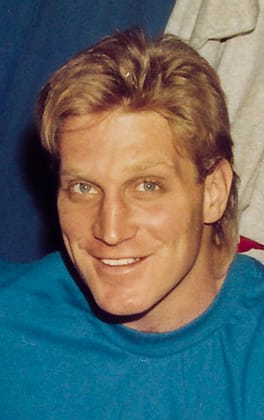
Photo: Johnmaxmena2 / CC BY-SA 4.0 (source: Wikimedia Commons)
Brett Hull was born in Belleville, Ontario, Canada on August 9, 1964. Public records list Brett Hull as an ice hockey player and actor. The age as of 2026 is 62. Education on record includes University of Minnesota Duluth. Listed accolades include Stanley Cup, Hart Memorial Trophy (1991), Lady Byng Memorial Trophy (1990) and 2 more.
My Take
Brett Hull is, for me, one of hockey's purest goal scorers, and a fascinating study in legacy. Born in Ontario and later American by citizenship, he carried the weight of an enormous family name and answered it with his own shot rather than borrowed glory. The 1991 Hart Trophy, the 1990 Lady Byng, a Stanley Cup, and a Hall of Fame plaque leave nothing to argue. What I respect most is that he never let his father's fame define him; he built an identity out of sheer scoring genius. Staying on in a front-office role afterward shows a love for the game that outlasted his playing days.
This take was written by generative AI, one per person, from publicly reported facts (editorial policy). It is a reading of the record, not reporting.
1. Profile
- Name (English)
- Brett Hull
- Name (Japanese)
- ブレット・ハル
- Reading
- ぶれっと・はる
- Born
- August 9, 1964 (age 62)
- Origin
- Belleville, Ontario, Canada
- Height
- 180 cm
- Occupation
- ice hockey player / actor
- Zodiac / Chinese zodiac
- Leo / Dragon
2. Background
- University
- University of Minnesota Duluth
Awards & achievements
- Stanley Cup
- 1991 Hart Memorial Trophy
- 1990 Lady Byng Memorial Trophy
- 1991 Lester B. Pearson Award
- Hockey Hall of Fame
3. Links
- Wikipedia (English)https://en.wikipedia.org/wiki/Brett%20Hull
- Wikipedia (Japanese)https://ja.wikipedia.org/wiki/%E3%83%96%E3%83%AC%E3%83%83%E3%83%88%E3%83%BB%E3%83%8F%E3%83%AB
- Wikidatahttps://www.wikidata.org/wiki/Q440363
4. About this entry
Tags
- Last updated
Facts are limited to publicly available information up to 2024; non-public or unconfirmed items are omitted. English text is machine-assisted (facts translated by Sonnet, "My Take" written by Opus 4.8). The Japanese page is the source of record.
Frequently asked questions
When was Brett Hull born?
Born August 9, 1964 (age 62).
Where is Brett Hull from?
Brett Hull is from Belleville, Ontario, Canada.
What does Brett Hull do?
Brett Hull works as ice hockey player, actor.
How tall is Brett Hull?
Brett Hull is 180 cm.
Ice hockey player — see all → · Actor — see all → · More people from Canada →