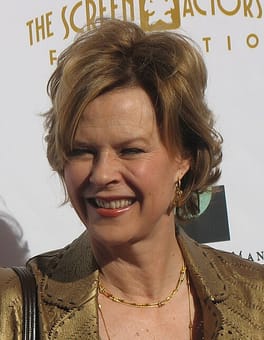
Photo: maggiejumps / CC BY 2.0 (source: Wikimedia Commons)
Born on December 6, 1948, JoBeth Williams is from Houston, Texas, United States. JoBeth Williams is credited as an actor and film director. The age as of 2026 is 77. Education on record includes Pembroke College in Brown University.
My Take
JoBeth Williams is one of those quietly essential actresses of the early 1980s who somehow never got the full credit she deserved — and I will never stop being annoyed about that. She held her own against Dustin Hoffman in Kramer vs. Kramer, survived the chaos of Poltergeist with raw, believable terror that made the whole haunted-house premise land, and then turned around and anchored The Big Chill as part of one of the best ensemble casts ever assembled. The Day After is genuinely traumatizing TV in the best way, and she is a big reason why. A Brown University grad who never coasted on looks or hype, Williams brought a grounded, intelligent warmth to every role — the kind of actress you trust completely the moment she walks on screen.
This take was written by generative AI, one per person, from publicly reported facts (editorial policy). It is a reading of the record, not reporting.
1. Profile
- Name (English)
- JoBeth Williams
- Name (Japanese)
- ジョベス・ウィリアムズ
- Reading
- じょべす・うぃりあむず
- Born
- December 6, 1948 (age 77)
- Origin
- Houston, Texas, United States
- Occupation
- actor / film director
- Zodiac / Chinese zodiac
- Sagittarius / Rat
2. Background
- University
- Pembroke College in Brown University
3. Links
4. About this entry
Tags
- Last updated
Only publicly available facts are listed; non-public or unconfirmed items are omitted. Base data was compiled from Wikidata from June 2026 onward; ages are recalculated daily and deaths are checked against Wikidata on an ongoing basis. English text is machine-assisted (facts translated by Sonnet, "My Take" written by Opus 4.8). The Japanese page is the source of record.
Frequently asked questions
When was JoBeth Williams born?
JoBeth Williams was born on December 6, 1948 and is 77 years old.
Where is JoBeth Williams from?
JoBeth Williams is from Houston, Texas, United States.
What does JoBeth Williams do?
JoBeth Williams works as actor, film director.
Where did JoBeth Williams study?
JoBeth Williams attended Pembroke College in Brown University.
Actor — see all → · Film director — see all → · More people from the United States → · More people born on December 6 →