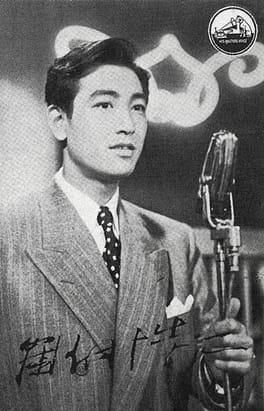
Photo: Unknown author / Public domain (source: Wikimedia Commons)
My Take
I'll be honest, the first thing that pops into my head with Kōji Tsuruta is that famous pose, one hand cupped to his ear, crooning something aching and bittersweet, and somehow that single image tells you everything about him. He was one of those postwar giants who could anchor a whole film just by standing there, all quiet gravity and shadowed cool, and when he stepped into a ninkyo yakuza role the air on screen just tightened up. The Hamamatsu kid who passed through Kansai University somehow carried this worn-in melancholy that you can't really teach. He didn't smile cheaply, which is exactly why it landed so hard when he did. To me he's the blueprint for a certain Showa-era masculinity, the guy who says more with his back turned than most can with a monologue.
This take was written by generative AI, one per person, from publicly reported facts (editorial policy). It is a reading of the record, not reporting.
Overview
Kōji Tsuruta (December 6, 1924 – June 16, 1987) was a Japanese singer and film actor born in Hamamatsu, Shizuoka. He attended Kansai University and rose to prominence as one of the leading stars of postwar Japanese cinema, particularly in yakuza and chivalry films. He was recognized with a Golden Arrow Award during his career. He remained active until his death in 1987.
1. Profile
- Name (English)
- Kōji Tsuruta
- Name (Japanese)
- 鶴田浩二
- Reading
- つるた こうじ
- Born
- December 6, 1924 – June 16, 1987
- Origin
- Hamamatsu, Shizuoka, Japan
- Height
- 172 cm
- Occupation
- Singer / Actor / Film Actor
- Zodiac / Chinese zodiac
- Sagittarius / Rat
- Active years
- 1948 - 1987
2. Background
- University
- Kansai University
Awards & achievements
- Golden Arrow Award (year unknown)
3. Relationships
- Spouse
- 中尾照子(元女優)
4. Works & records
Works summary
- Appearances
- 347 (1950–1987)
- By year
- 1950: 12, 1951: 13, 1952: 10, 1953: 9, 1954: 11, 1955: 11, 1956: 10, 1957: 9, 1958: 11, 1959: 10, 1960: 10, 1961: 11, 1962: 12, 1963: 10, 1964: 8, 1965: 15, 1966: 13, 1967: 16, 1968: 16, 1969: 9, 1970: 12, 1971: 13, 1972: 10, 1973: 2, 1974: 1, 1975: 1, 1976: 1, 1977: 7, 1978: 6, 1979: 4, 1980: 4, 1981: 6, 1982: 2, 1983: 3, 1984: 3, 1985: 2, 1986: 1, 1987: 1
- Debut work
- 続影法師 龍虎相搏つ
Filmography / notable works
| Category | Title | Year |
|---|---|---|
| ビクター時代 | 望郷歌 / エレジー | 1987 |
| TV drama | シャツの店 | 1986 |
| Film | 最後の博徒 | 1985 |
| TV drama | 父にかかる電話 | 1985 |
| Film | 修羅の群れ | 1984 |
| TV drama | 鳥よ… | 1984 |
| TV drama | 山河燃ゆ | 1984 |
| TV drama | モーテルの女が消えた! | 1983 |
| TV drama | 勇者は語らず いま、日米自動車戦争は | 1983 |
| TV drama | 義母と小姑 | 1983 |
| Film | 制覇 | 1982 |
| TV drama | レイプされた恋人 | 1982 |
| Film | 青春の門 | 1981 |
| Film | ちゃんばらグラフィティー 斬る! | 1981 |
| Film | 連合艦隊 | 1981 |
| TV drama | 華やかな狙撃者 | 1981 |
| TV drama | 警視庁殺人課 | 1981 |
| ビクター時代 | 想われ人は想い人/シンギング・ボトル | 1981 |
| Film | 戒厳令の夜 | 1980 |
| TV drama | 獅子の時代 | 1980 |
| TV drama | 三重逆転! 完全犯罪 | 1980 |
| TV drama | 悪党狩り | 1980 |
| Film | 総長の首 | 1979 |
| Film | 黄金の犬 | 1979 |
| TV drama | 囁く手首の謎 | 1979 |
| ビクター時代 | 散る桜残る桜も散る桜 | 1979 |
| Film | 聖職の碑 | 1978 |
| TV drama | 黄金の日日 | 1978 |
| TV drama | 大空港 | 1978 |
| TV drama | 黒白の暗示 | 1978 |
| TV drama | 天使の証言 | 1978 |
| ビクター時代 | たんぽぽの花 | 1978 |
| Film | やくざ戦争 日本の首領 | 1977 |
| Film | 日本の仁義 | 1977 |
| Film | ゴルゴ13 九竜の首 | 1977 |
| Film | 人間の証明 | 1977 |
| TV drama | 男(前編) | 1977 |
| TV drama | 男(後編) | 1977 |
| Album | ビッグ・ショー | 1977 |
| TV drama | 男たちの旅路 | 1976 |
| ビクター時代 | あゝ戦友 | 1975 |
| Film | あゝ決戦航空隊 | 1974 |
| Film | 三池監獄 兇悪犯 | 1973 |
| TV drama | 新選組 | 1973 |
| Film | 博奕打ち外伝 | 1972 |
| Film | 日本暴力団 殺しの盃 | 1972 |
| Film | 傷だらけの人生 古い奴でござんす | 1972 |
| Film | 関東緋桜一家 | 1972 |
| Film | ギャング対ギャング 赤と黒のブルース | 1972 |
| Film | 着流し百人 | 1972 |
| Film | 日蔭者 | 1972 |
| Film | 昭和残侠伝 破れ傘 | 1972 |
| TV drama | 沓掛時次郎 | 1972 |
| ビクター時代 | 日陰者 | 1972 |
| Film | 博徒外人部隊 | 1971 |
| Film | 博徒斬り込み隊 | 1971 |
| Film | 博奕打ち いのち札 | 1971 |
| Film | 緋牡丹博徒 お命戴きます | 1971 |
| Film | 女渡世人 | 1971 |
| Film | 日本やくざ伝 総長への道 | 1971 |
5. Links
- Wikipedia (Japanese)https://ja.wikipedia.org/wiki/%E9%B6%B4%E7%94%B0%E6%B5%A9%E4%BA%8C
- Wikidatahttps://www.wikidata.org/wiki/Q1092063
6. About this entry
Tags
- Last updated
Facts are limited to publicly available information up to 2024; non-public or unconfirmed items are omitted. Works and profile fields sourced from Wikipedia reflect content as of 2026-08-26. English text is machine-assisted (facts translated by Sonnet, "My Take" written by Opus 4.8). The Japanese page is the source of record.
Frequently asked questions
When was Kōji Tsuruta born?
Born December 6, 1924.
When did Kōji Tsuruta die?
Died June 16, 1987, aged 62.
Where was Kōji Tsuruta from?
Kōji Tsuruta was from Hamamatsu, Shizuoka, Japan.
What did Kōji Tsuruta do?
Kōji Tsuruta worked as Singer, Actor, Film Actor.
How tall was Kōji Tsuruta?
Kōji Tsuruta was 172 cm.
When was Kōji Tsuruta active?
1948 - 1987.
What was Kōji Tsuruta known for?
Notable works include 望郷歌 / エレジー, シャツの店, 最後の博徒.
Singer — see all → · Actor — see all → · More people from Japan →