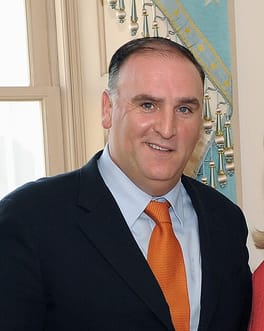
Photo: U.S. Department of State / Public domain (source: Wikimedia Commons)
José Andrés is a chef, television presenter and cook, born on July 13, 1969 in Mieres, Asturias, Spain. As of 2026, José Andrés is 57 years old. Awards on record include Vilcek Prize (2011), National Humanities Medal (2015), Gold Medal of Merit in the Fine Arts (2017) and 5 more.
My Take
José Andrés might be the chef I admire most, and not chiefly for his Michelin-level cooking. Born in Mieres, Asturias, he moved to the United States and reshaped how Americans understand Spanish cuisine. But what moves me is World Central Kitchen, his habit of showing up in disaster zones with pots and feeding people when systems collapse. A Princess of Asturias Award for Concord is extraordinary for a cook, and it reflects work that transcends the kitchen entirely. Andrés proves that a warm meal can be an act of hope and dignity. That conviction, lived out repeatedly, is real greatness to me.
This take was written by generative AI, one per person, from publicly reported facts (editorial policy). It is a reading of the record, not reporting.
1. Profile
- Name (English)
- José Andrés
- Name (Japanese)
- ホセ・アンドレス
- Reading
- ほせ・あんどれす
- Born
- July 13, 1969 (age 57)
- Origin
- Mieres, Asturias, Spain
- Occupation
- chef / television presenter / cook / restaurateur
- Zodiac / Chinese zodiac
- Cancer / Rooster
2. Background
Awards & achievements
- 2011 Vilcek Prize
- 2015 National Humanities Medal
- 2017 Gold Medal of Merit in the Fine Arts
- 2010 Order of Arts and Letters
- 2020 Basque Culinary World Prize
- 2021 Princess of Asturias Award for Concord
- 2018 Time 100
- 2011 Great Immigrants Award
3. Links
4. About this entry
Tags
- Last updated
Facts are limited to publicly available information up to 2024; non-public or unconfirmed items are omitted. English text is machine-assisted (facts translated by Sonnet, "My Take" written by Opus 4.8). The Japanese page is the source of record.
Frequently asked questions
When was José Andrés born?
José Andrés was born on July 13, 1969 and is 57 years old.
Where is José Andrés from?
José Andrés is from Mieres, Asturias, Spain.
What does José Andrés do?
José Andrés works as chef, television presenter, cook, restaurateur.
Chef — see all → · Television presenter — see all → · More people from Spain → · More people born on July 13 →